

Three months ago, this candidate seemed incredibly promising. Their interview answers were sharp, their experience was relevant, and the entire hiring team agreed they were the best choice.
Today, they’re handing in their resignation. The reason: “not quite the right fit.”
If this isn’t the first time this has happened in your organization, it’s probably not about salary or benefits. Something more fundamental was missed from the start.
Early turnover — new hires resigning within the first 3 to 6 months — is one of the clearest signals that a mismatch existed and was actually detectable before day one, not something that suddenly appeared after the person joined.
In exit interviews, “salary” or “better opportunity” is the safest answer to give — for both the resigning employee and the HR person recording it. No one has to feel at fault.
But dig a little deeper, and the reasons that come up far more often are things like:
• “I thought the job would be like what was described in the interview”
• “I didn’t expect the work culture to be like this”
• “My manager and I just work very differently”
• “I don’t think I did anything wrong, but it never felt right”
None of these are about compensation. They’re about fit — between how someone naturally works, and what the role and team actually require.
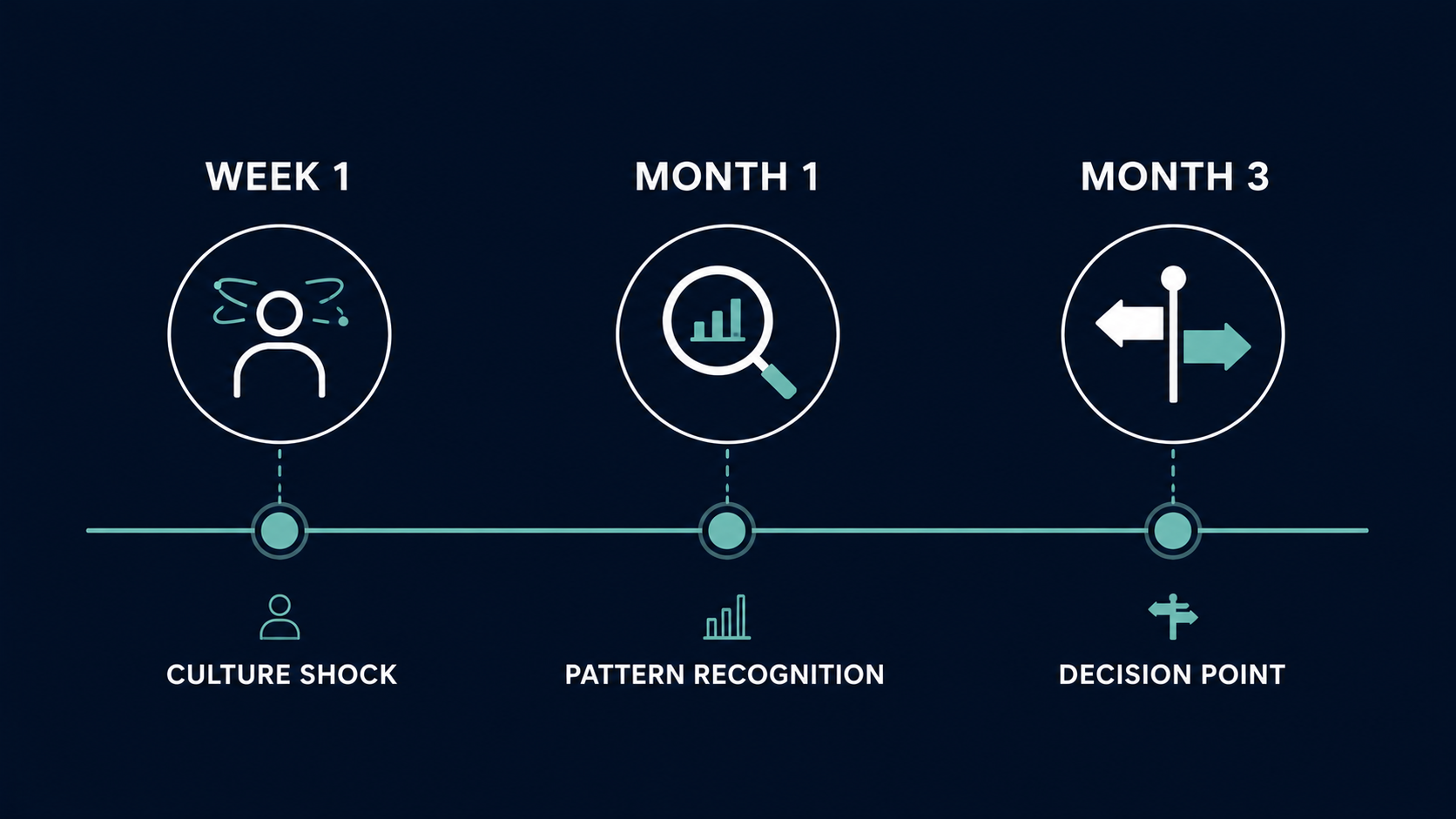
Week one — culture shock
What was described in the interview often differs from day-to-day reality. But deeper than that: the new hire’s natural working style starts meeting the team’s existing rhythm — and the first friction begins to surface.
Month one — working patterns become clear
At this point, both the new hire and the team start noticing whether ways of thinking, communicating, and solving problems are genuinely aligned — or whether both sides are putting in extra effort just to understand each other.
Month three — the decision is made
By now, both sides usually have enough informal evidence to conclude whether this will work long-term or not. Unfortunately, by this point, the costs already incurred — onboarding time, training, and team adjustment — are already substantial.
The things that cause early turnover usually aren’t genuinely new surprises. These patterns typically already exist within the candidate — they just weren’t read before they joined.
Preference for work structure
Does someone work best with clear, structured direction, or with freedom and ambiguity? A role and team misaligned with this preference will start feeling exhausting quickly — not because the person lacks competence, but because their energy is being spent adapting to something that doesn’t come naturally to them.
Need for social connection at work
Some people perform best with high social interaction. Others are more productive with more independent working space. Mismatch here is often misread as “not fitting the company culture” — when it’s really about a very personal working preference.
How someone responds to feedback and pressure
How does someone react to criticism, sudden deadlines, or abrupt changes in direction? This is a remarkably consistent pattern for each individual — and often becomes the biggest source of friction with a new manager early on.
Set realistic expectations from the interview stage
Not just the job description, but also the actual working rhythm, team communication style, and culture — not a “polished” version of it.
Map candidate working patterns before the final decision
Not just evaluating technical competence, but understanding structural preferences, social needs, and how someone responds to pressure — before they officially join.
Compare candidate patterns against existing team dynamics
A candidate who’s individually competent isn’t automatically a fit for the specific rhythm and culture of the team they’ll be joining.
Cavlent helps companies understand a candidate’s working patterns — structural preferences, social needs, and how they respond to pressure — before the final hiring decision is made, not after problems become visible in month three.
With insights available the same day, this data can become an additional input when comparing candidates — helping hiring teams spot potential mismatches that are difficult to detect through CVs and interviews alone.
→ Explore Cavlent’s solutions for more objective recruitment
You might also find these useful:
→ The real cost of a bad hire: what companies are losing
→ Why your best employee isn’t always your best future leader
→ How to read a Cavlent behavioral mapping report for candidate screening

What is early turnover?
Early turnover refers to new hires resigning shortly after joining — typically within the first 3 to 6 months. It differs from general turnover because it usually signals a mismatch that existed from the recruitment process itself, rather than a new problem that emerged afterward.
Why isn’t “salary” the real reason new hires quit?
Salary is the easiest answer to give in an exit interview because it doesn’t feel personal to anyone involved. The more common underlying reason is a mismatch between an employee’s natural working style and the team’s rhythm, the manager’s leadership style, or the role’s actual expectations.
What are the early signs that a new hire is experiencing a mismatch?
Common signs include: appearing less engaged in the first few weeks, repeatedly asking to clarify expectations, struggling to align communication style with the team, or seeming more drained than expected even when workload isn’t particularly heavy. These signs typically appear long before a resignation decision is made.
How can potential mismatch be detected before a candidate joins?
Beyond interviews and reference checks, mapping a candidate’s behavioral patterns — such as structural preferences, social needs, and how they respond to pressure — can help identify potential mismatches earlier, before the final hiring decision is made.
Can good onboarding prevent early turnover?
Good onboarding helps, but it can’t fully compensate for a mismatch that existed from the start. If a candidate’s working preferences genuinely don’t align with the role’s demands or the team’s culture, even the best onboarding will only delay — not prevent — a resignation that’s likely to happen eventually.