
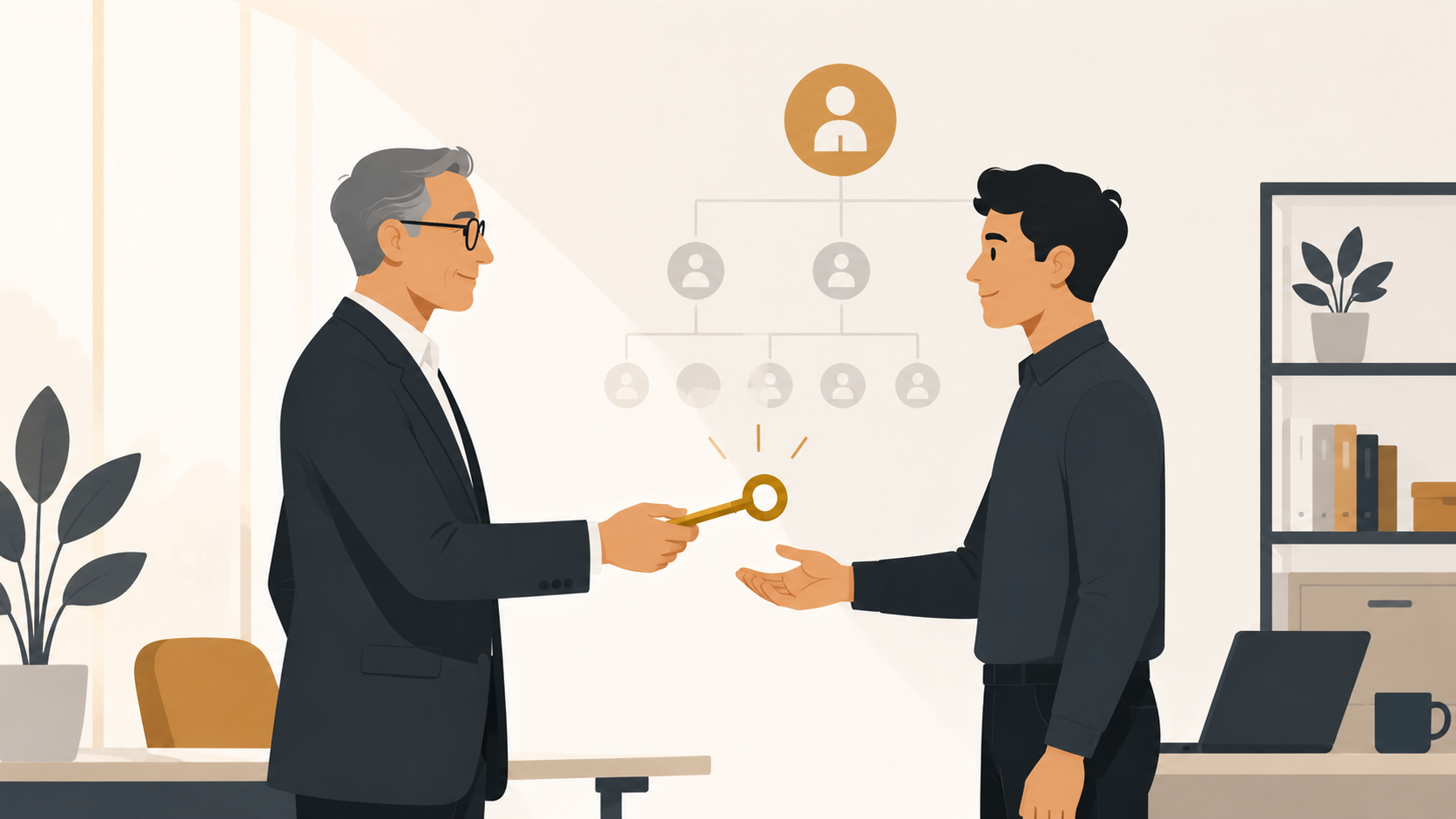
This business was built from nothing by its founder — hard work, sharp instinct, and trust built over years with a team that feels like family. Now, the next generation or a new professional team has been asked to take the business to its next stage.
On paper, this sounds like a natural step forward. In practice, it’s one of the most difficult transitions an organization can face.
The transition from family business to professional management is the process of changing how an organization is run — from decisions based on personal relationships and founder intuition, to a system that’s more structured, measurable, and not dependent on one person. This isn’t just about replacing people in key positions — it’s about changing the foundation of how the organization works.
Family businesses typically grow with a very personal working culture. Decisions get made quickly because trust has been built over time. Hierarchy is often loose because everyone already knows each other.
When professional management enters — whether it’s the second generation, outside professionals, or a combination of both — several things start to change fundamentally:
This shift isn’t just about organizational structure on paper — it’s about changing habits and behavioral patterns that have been running for years.
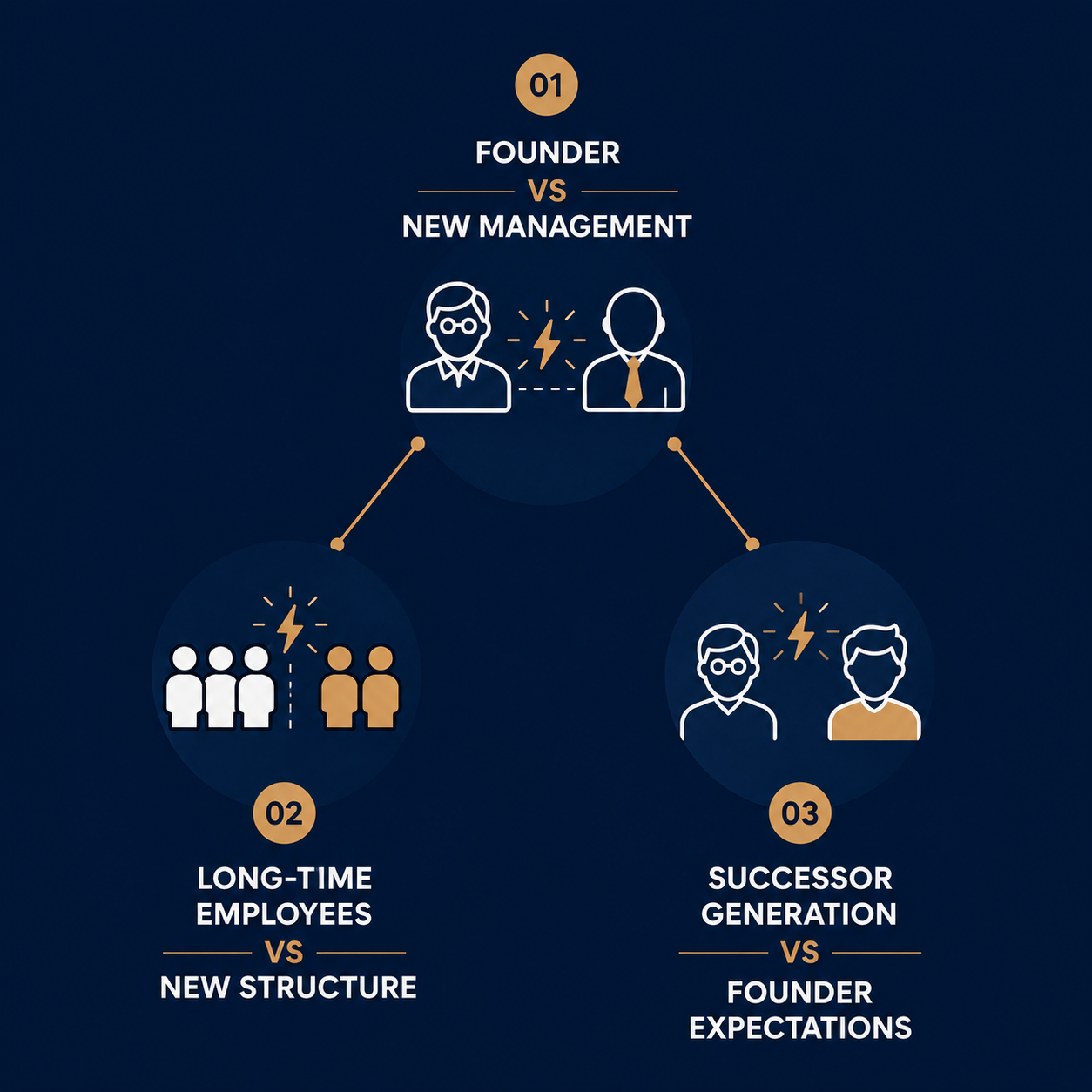
Friction between the founder and new management
Founders often feel new decisions are too slow or too bureaucratic. New management often struggles to gain full trust to make decisions without constant intervention.
Friction between long-time employees and new structures
Employees accustomed to informal ways of working often feel uncomfortable with SOPs, KPIs, or more formal reporting structures. Not because they’re deliberately resisting change — but because their working patterns are deeply ingrained in the old way of doing things.
Friction between the next generation and the founder’s expectations
When a transition involves a successor generation, tension often arises between the desire to bring in new approaches and the founder’s expectation to preserve what has proven successful so far.
Many family business transitions have a genuinely solid business strategy — market research has been done, expansion plans are in place, new systems have been carefully designed.
What often gets missed is one thing: the behavioral readiness of the people who will actually execute that strategy.
Questions rarely asked before a transition begins:
Without answering these questions, even the best strategy will struggle to be executed — because the people executing it are humans with deeply formed behavioral patterns.
Map behavioral readiness before designing the new structure
Before deciding who holds which position, first understand the working patterns, motivation, and adaptability of the key people involved — from both the family side and the professional team.
Align expectations explicitly, not through assumption
Much friction happens because differing expectations are never discussed openly. Founders need to clearly communicate what they expect, and the next generation needs to understand the boundaries and concerns underlying those expectations.
Make the transition gradual, not an abrupt total overhaul
A transition that’s too aggressive often creates unnecessary resistance. Giving long-time employees room to adapt helps reduce friction without sacrificing the direction of the change being pursued.
Cavlent helps organizations understand the behavioral readiness of everyone involved in a transition — founders, successor generations, and key employees — before a new structure is designed and implemented.
By objectively mapping leadership patterns, motivation, and adaptability, behavioral mapping data helps open a more honest conversation about transition readiness — something often difficult to discuss directly in a context where family and business relationships are intertwined.
→ Explore Cavlent’s solutions for organizational and leadership transformation
→ When the data is already there, but change still doesn’t happen
→ Why your best employee isn’t always your best future leader
→ When the rupiah weakens — why internal organizational readiness determines business resilience
What does transitioning from a family business to professional management mean?
It’s the process of changing how an organization is run — from decisions based on personal relationships and founder intuition, to a system that’s more structured and not dependent on one person. This transition involves changes in structure, process, and most importantly, changes in the behavioral patterns of the people involved.
Why do family business transitions often fail even with a good business strategy?
Because a good strategy still requires people who are behaviorally ready to execute it. Many transitions stall not because the business plan is flawed, but because the founder’s readiness to let go of control, new management’s readiness to lead in a fitting way, or long-time employees’ readiness to adapt was never actually mapped before the transition began.
What are the most common sources of friction in family business transitions?
The three most common sources are: friction between the founder and new management over decision-making speed and style, friction between long-time employees and more formal new structures, and friction between the successor generation and the founder’s expectation to preserve proven ways of working.
How do you know if a founder is genuinely ready to let go of control?
This readiness shows up more in behavioral patterns than in verbal statements. Objectively mapping a founder’s motivation and behavioral tendencies can help understand how genuinely ready they are to delegate decisions — not just in principle, but consistently in day-to-day practice.
How does behavioral mapping help the family business transition process?
Behavioral mapping helps objectively map the behavioral readiness of everyone involved — founders, successor generations, and key employees. This data opens a more honest conversation about transition readiness, helps identify potential friction earlier, and supports designing a new structure that’s more realistic given the people who will actually run it.