

Talent mapping is the process of understanding who exists within an organization — their potential, their capabilities, their readiness for larger roles, and where gaps need to be filled — so decisions about development, promotion, and placement can be made based on a more complete and objective picture.
Simply put: before an organization decides who to promote, who to develop, or who poses the highest risk if they suddenly leave — talent mapping provides the data to answer those questions with more confidence.
Many people decisions — promotions, rotations, succession — are made based on long-term impressions, seniority, or proximity to the decision-maker. Not because leaders don’t care, but because there’s no process systematically collecting data about potential.
As a result, organizations often only discover who their real talent is after that person has resigned, been pursued by a competitor, or been promoted into a role that turns out not to fit.
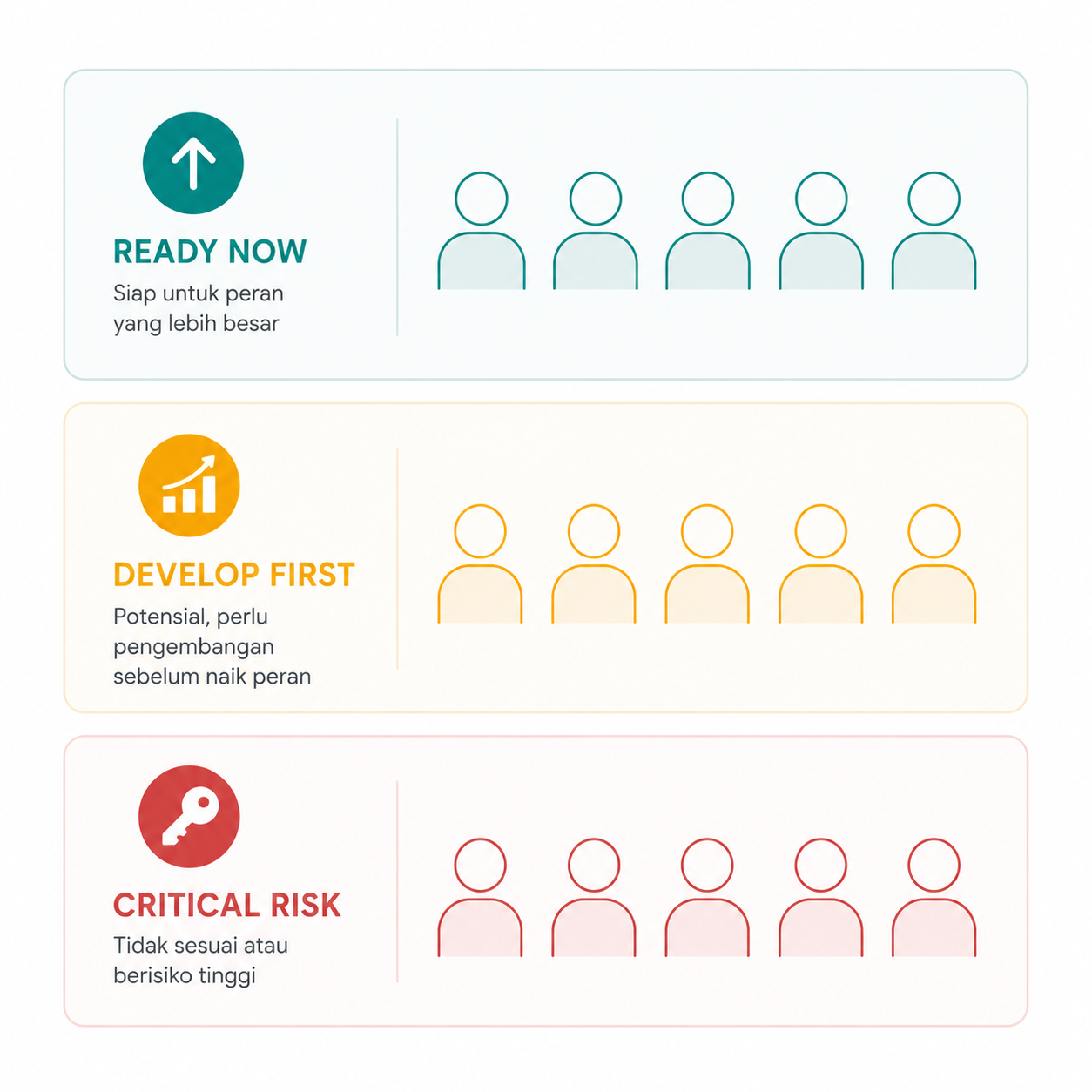
Who is ready now
Individuals with the capability and behavioral readiness to take on a larger role — both technically and in terms of working patterns and leadership approach.
Who needs development first
Individuals with high potential but who need specific development before they’re ready for the next role. This is the most valuable investment — but it’s often not identified because there’s no adequate data.
Who represents a critical risk
Individuals whose role is highly critical to operational continuity or strategy, but where no one has been prepared to step in if they leave. This is the most expensive blind spot an organization can have.
Before reorganization or expansion — ensuring there are people ready to fill the new roles being created. When building a succession plan — identifying who is being prepared for key positions long-term. Or when an organization starts scaling and can no longer afford to depend on just one or two key people.
Cavlent helps organizations run talent mapping with objective behavioral data — providing a more complete picture of individual potential and readiness, not just based on track record or subjective impression.
→ Explore Cavlent’s solutions for talent mapping
→ Case study: key persons mapping to identify critical individuals in an organization
→ Why your best employee isn’t always your best future leader
→ Internal mobility: how to keep your best people without hiring new ones
What is talent mapping?
Talent mapping is the process of understanding who exists within an organization — their potential, capabilities, and readiness for larger roles — so development, promotion, and placement decisions can be made based on more complete, objective data rather than impressions or seniority alone.
What are the main benefits of talent mapping for an organization?
Three main benefits: organizations can identify who is ready for a larger role now, who needs development before being promoted, and who represents a critical risk if they suddenly leave. All three are highly valuable information for long-term people planning.
Is talent mapping only for large companies?
No. For smaller businesses, dependence on one or two key people can be extremely risky. Talent mapping helps identify this risk earlier — and design more intentional development steps before that risk becomes a crisis.