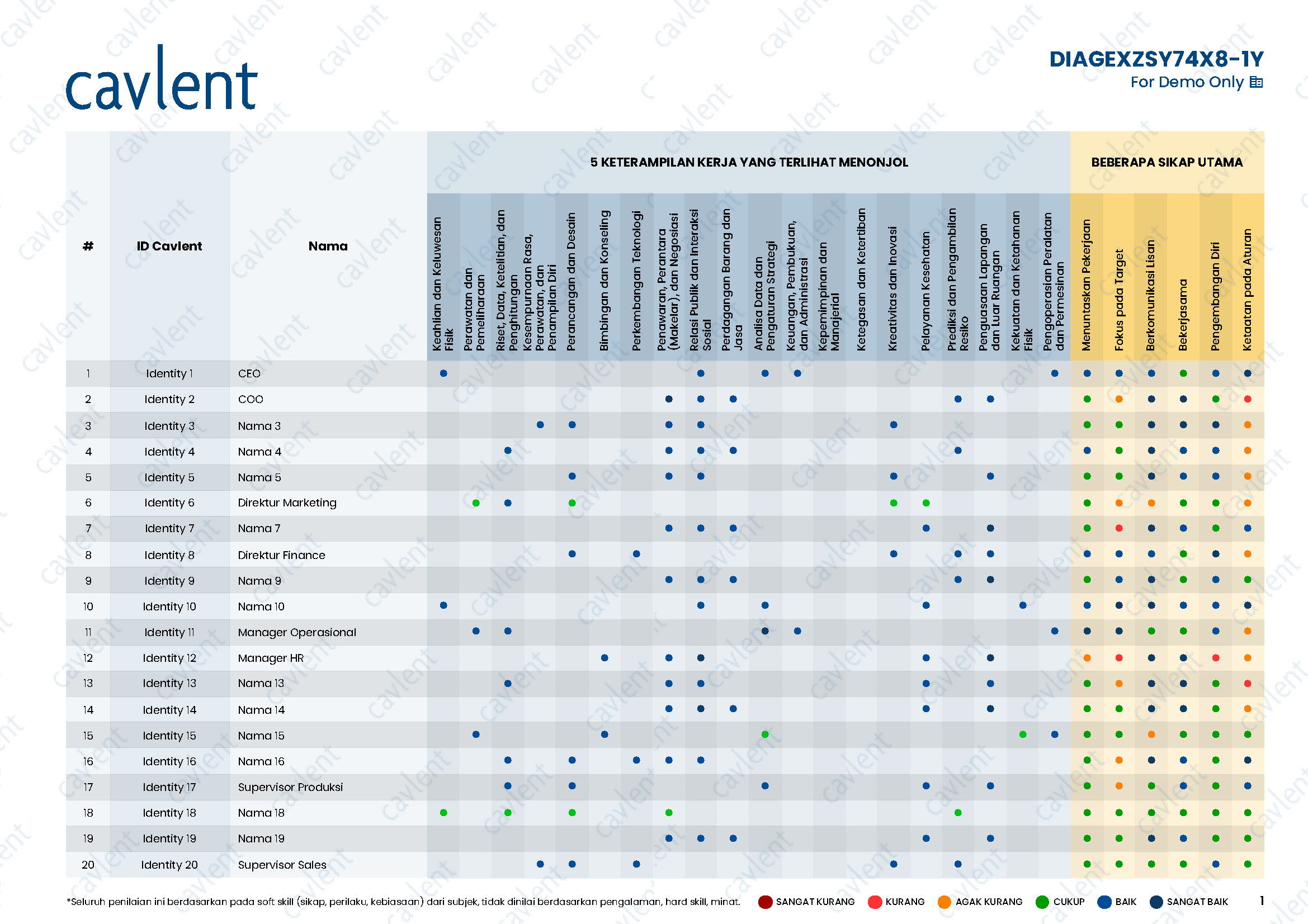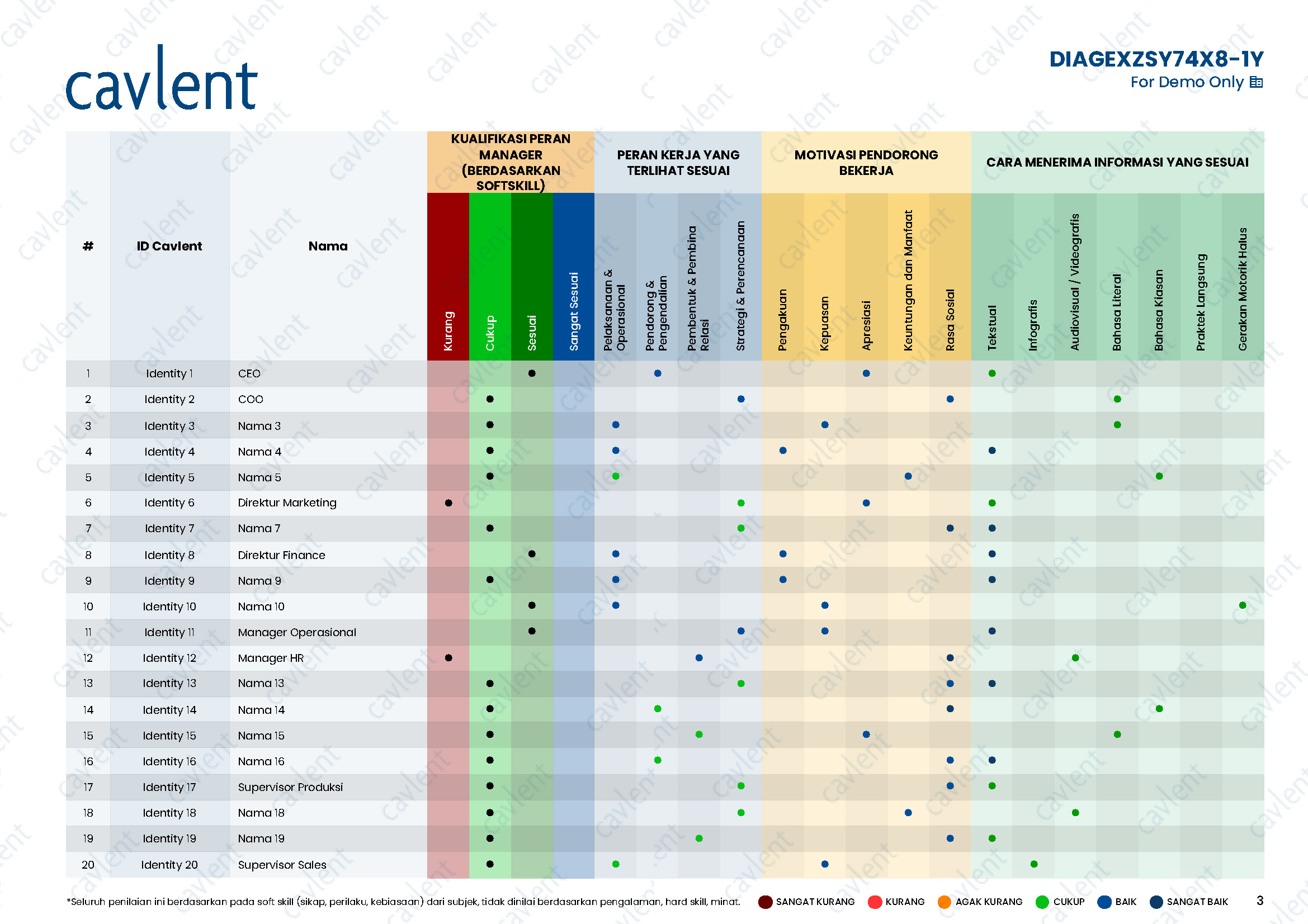

Management wanted to ensure whether the team structure was aligned with actual work roles through Cavlent Organization Mapping of 20 key persons.
A formal job title is not always the same as the actual work pattern. If this were your team, would your current business strategy still be relevant to the team's reality on the ground?
Cavlent helps business owners and HR teams identify critical individuals in their organization through behavioral team mapping — as an objective foundation for restructuring, talent development, and succession planning decisions.
→ Explore Cavlent's solutions for strategic people mapping
→ Case study: team mapping summary for a collective view of all team patterns at once
→ Case study: SPV and Manager team diagnostic for identifying structural gaps
→ When data is already available but change still doesn't happen — what to check first
What is Key Persons Mapping?
Key Persons Mapping is the process of identifying the critical individuals in an organization — those whose actual roles have the greatest impact on the continuity of business strategy. The goal isn’t just to see who matters by job title, but to understand who is truly holding up daily operations and decision-making.
Why doesn’t a formal job title always reflect someone’s actual role?
Because how someone actually works is shaped by their behavior, motivation, and how they interact — not just by their job description. In this case study, several individuals were found to be operating outside their expected functions, leading to unsynchronized coordination and the owner having to step in repeatedly.
When should a company conduct Key Persons Mapping?
Key Persons Mapping is most relevant during rapid growth phases, expansion to new locations, restructuring, or when there are signs that strategic positions aren’t functioning as expected. It’s also useful as a baseline before designing leadership development programs.
How many people should ideally be included in Key Persons Mapping?
There’s no fixed number. In this case study, 20 key individuals were mapped — from C-level down to Supervisor level. What matters most is selecting the people whose positions have the greatest impact on business strategy, rather than including everyone without prioritization.
Can Key Persons Mapping results be used directly as the basis for reorganization decisions?
Mapping data provides a strong foundation, but it shouldn’t be the only consideration. Reorganization decisions still need to account for business objectives, company culture, financial conditions, and external context. Cavlent serves as an early data navigator, not the final decision-maker.