
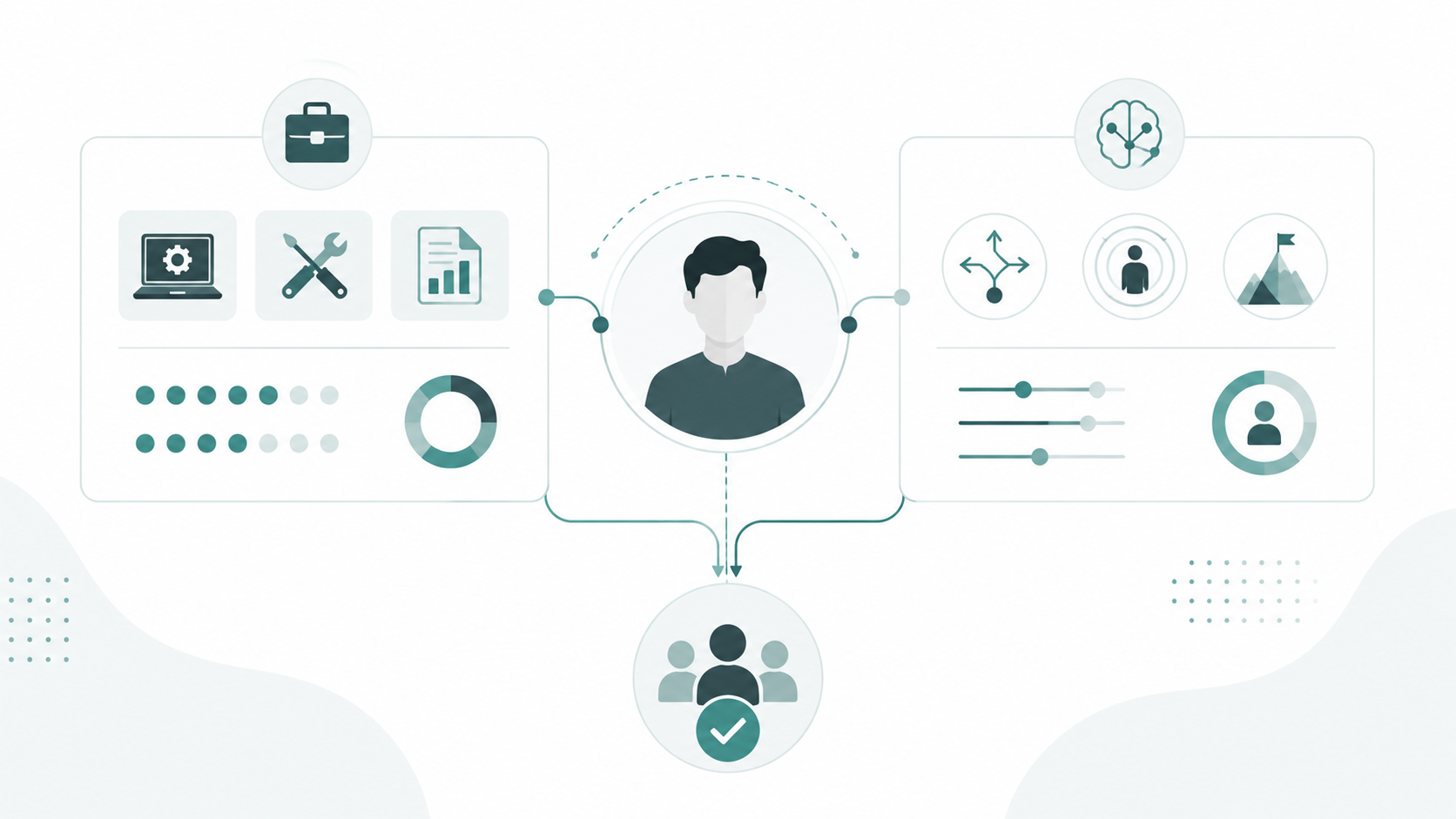
Skills-based hiring is a recruitment approach that evaluates candidates based on actual capability and competence — not degree, educational institution, or previous company name. It’s a healthy shift away from credential-based hiring that has long dominated.
But there’s one thing skills-based hiring still can’t answer on its own: how someone actually works in the context of a specific team and role.
Skills can be verified. Portfolios can be evaluated. Technical tests can measure competence. But these questions remain unanswered from skill data alone:
Recruitment based solely on skill risks producing candidates who are technically competent but behaviorally mismatched — which ultimately impacts team performance, not just individual performance.
Effective skills-based hiring isn’t just about replacing “degree from a prestigious university” with “strong portfolio.” It needs to be complemented with an understanding of behavioral patterns — how someone works, collaborates, and stays motivated — to produce hiring decisions that are truly evidence-based.
Cavlent complements skills-based hiring processes with behavioral data available in under 20 minutes — providing a more complete picture before the final decision is made.
→ Explore Cavlent’s solutions for more objective recruitment
→ What does an employee assessment actually measure?
→ Great skills, poor culture fit: which one costs you more?
→ The real cost of a bad hire: what companies are losing
What is skills-based hiring?
Skills-based hiring is a recruitment approach that evaluates candidates based on actual capability and competence — not degree, educational institution, or previous company name. The goal is to make the hiring process more meritocratic and grounded in real evidence.
Why isn’t skills-based hiring enough on its own?
Because skill only shows what a candidate can do — not how they tend to work in the context of a specific team and role. Motivation, collaboration patterns, and how someone responds to pressure aren’t readable from a portfolio or technical test, no matter how strong.
How can skills-based hiring be complemented with behavioral data?
After the skills assessment stage, add a behavioral mapping layer that maps the candidate’s dominant motivation, working patterns, and collaboration tendencies. The combination produces a far more complete picture to support stronger hiring decisions.