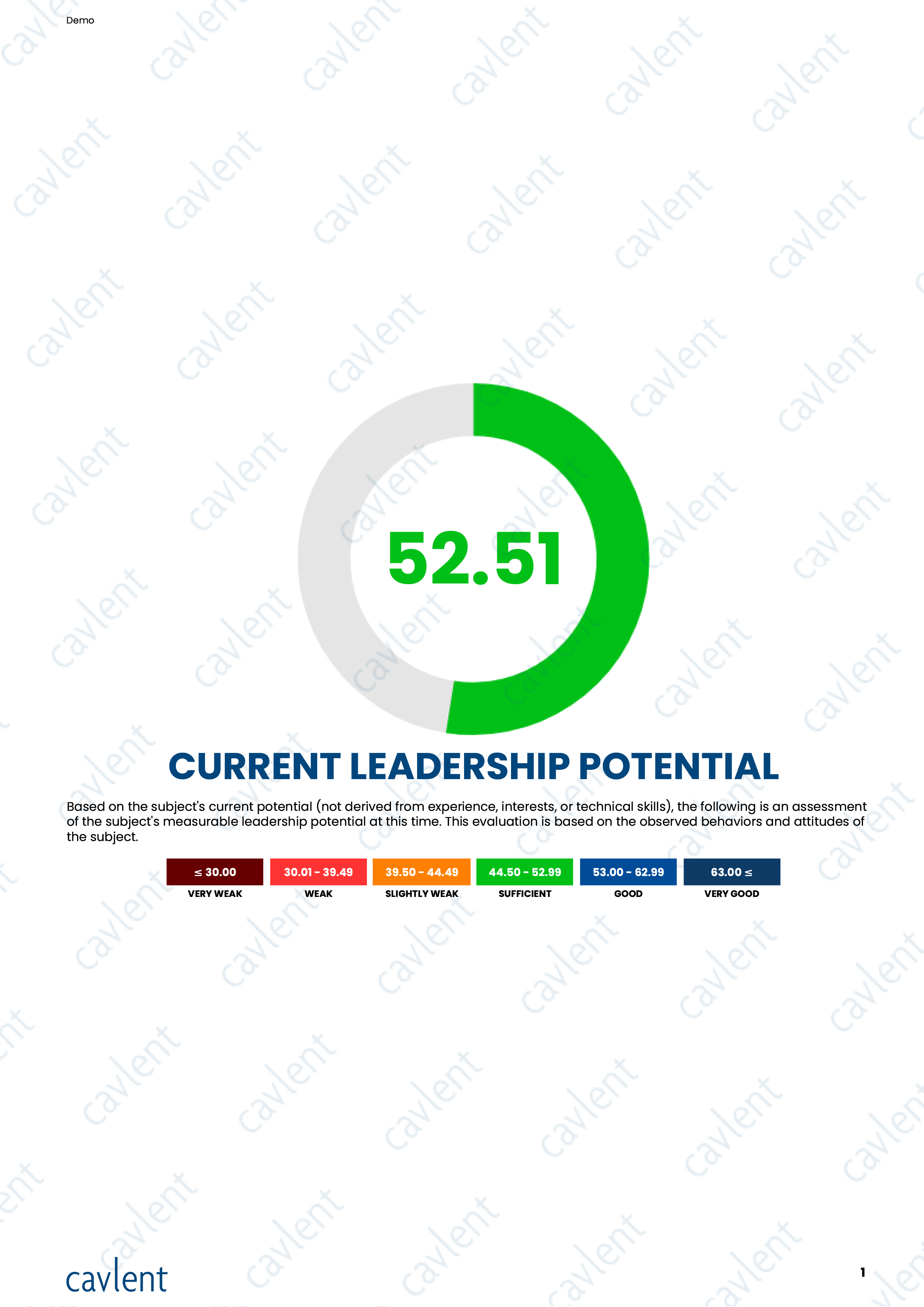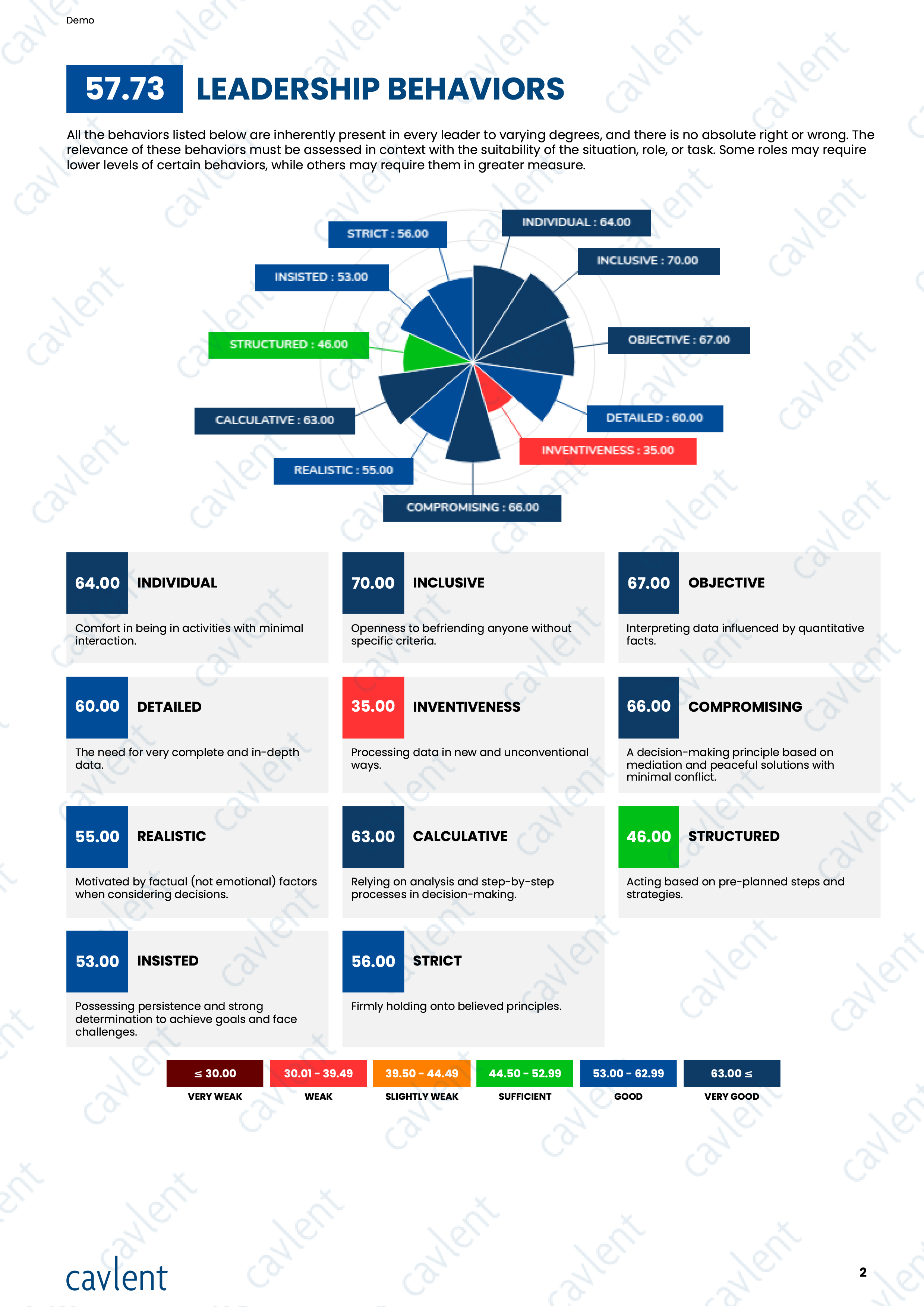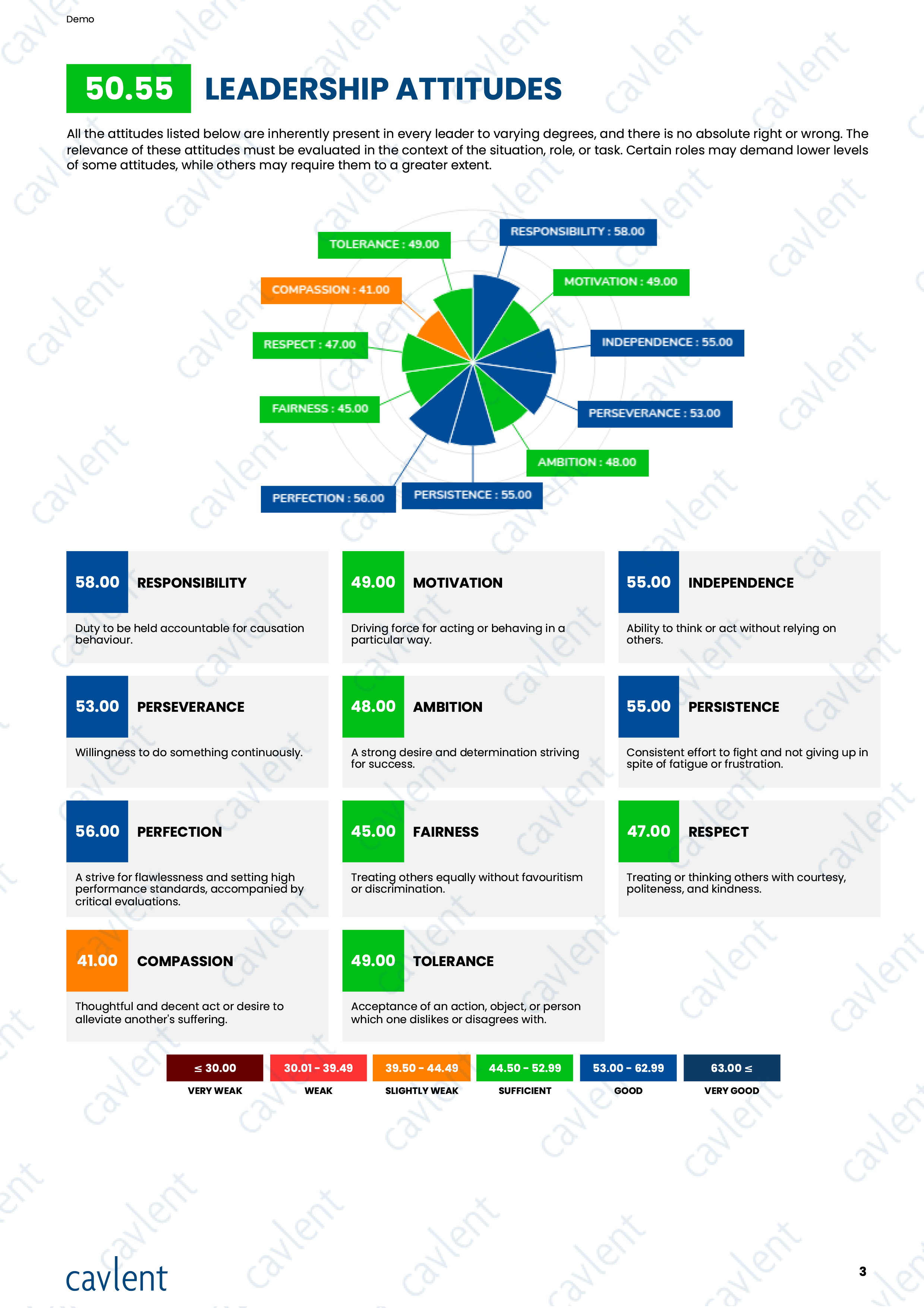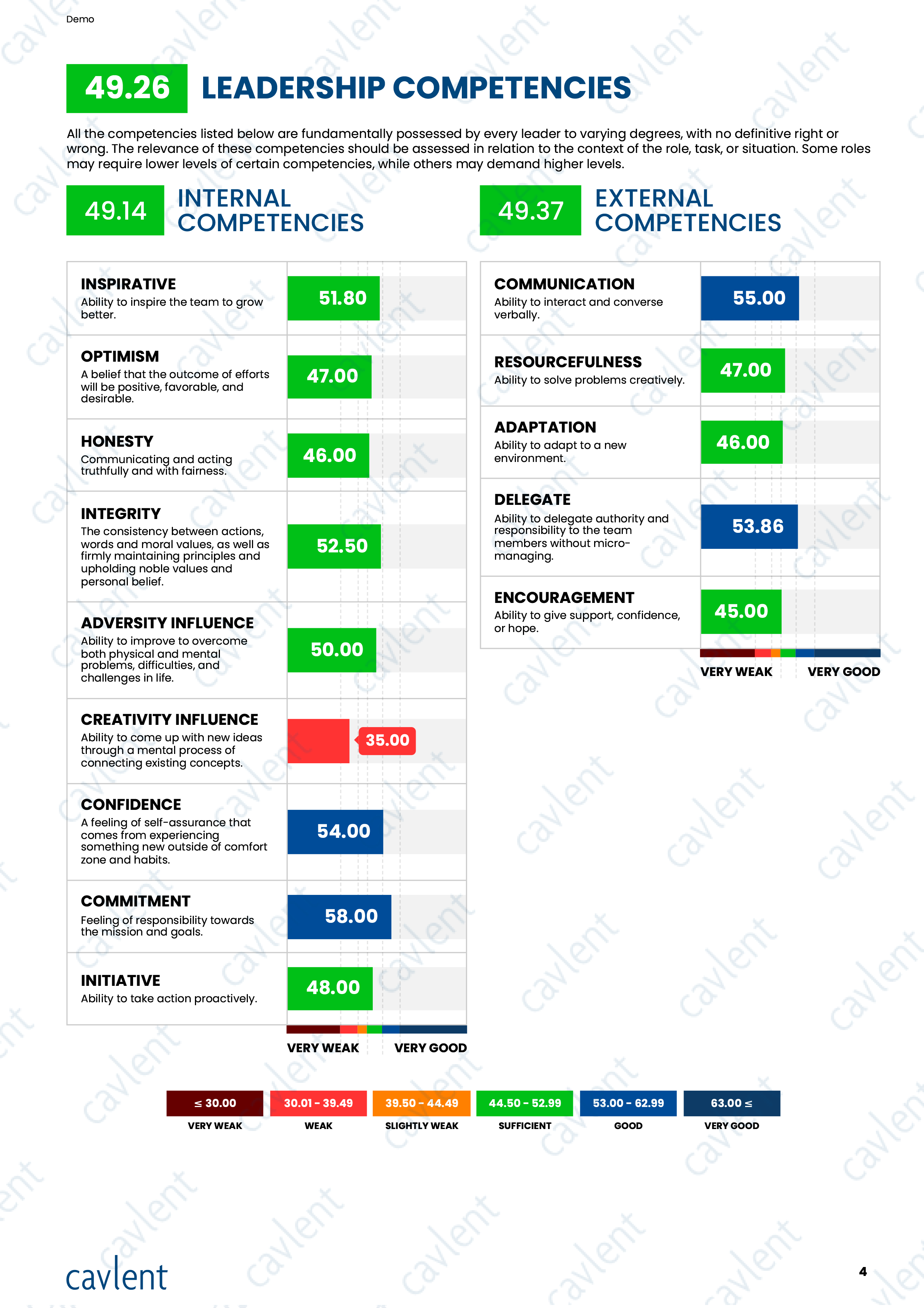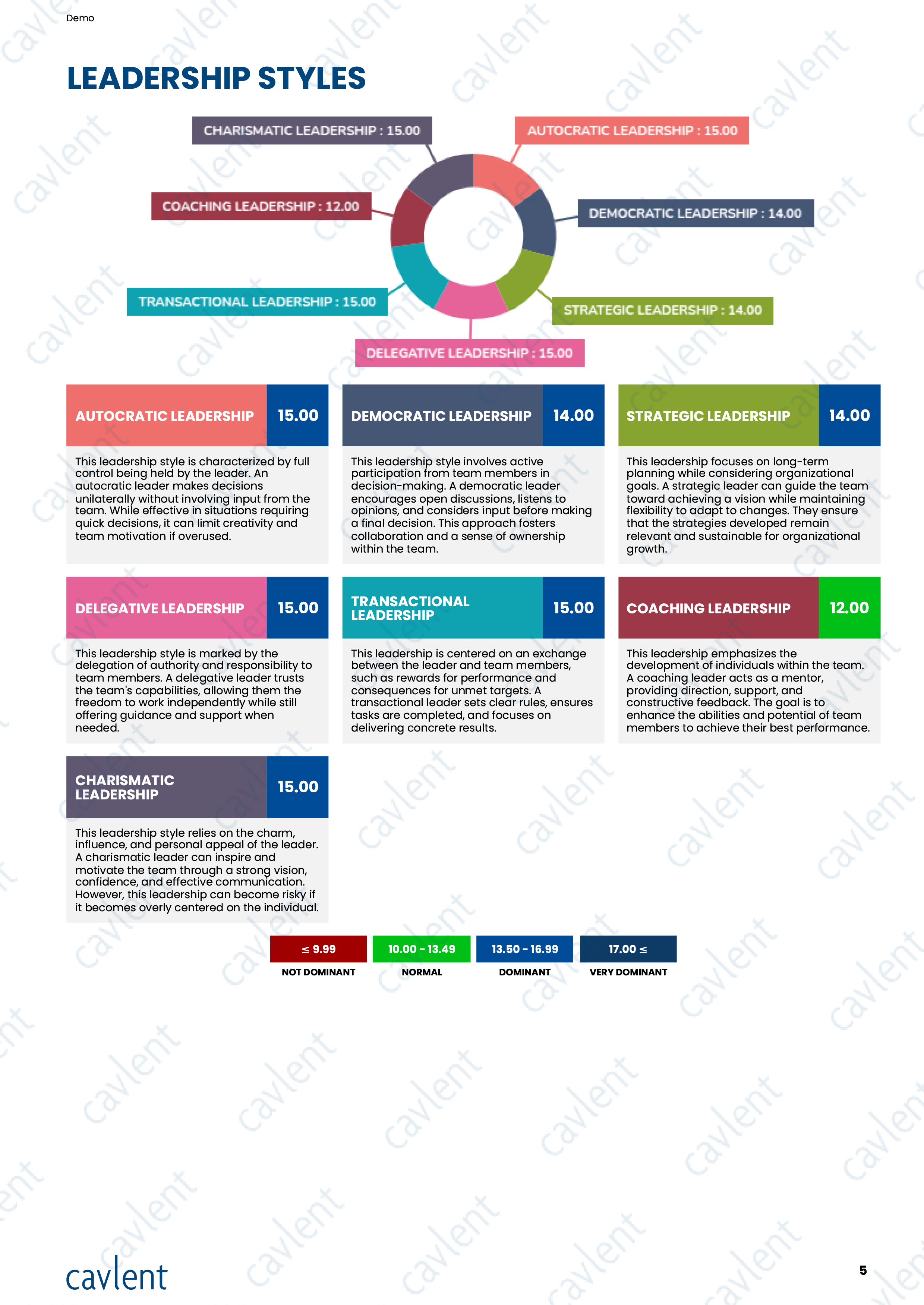
Leader Profile
What Appears Strong?
What Needs Further Attention?
Strategist / Driver
Strong logic and high commitment.
Needs support to develop long-term thinking and comfort with uncertainty.
Collaborative People Manager
Mediative and collaborative by nature.
Needs reinforcement to not only maintain harmony, but also actively drive performance.
Reliable Executor
Well-suited for system-based or operational targets.
May be more effective when paired with a more visionary leadership figure.
Cavlent helps business owners, HR leaders, consultants, and coaches understand the behavioral patterns of teams and individuals — as an objective foundation for coaching, promotion, and leadership development decisions.
→ Explore Cavlent's solutions for leadership and team development
→ Why the strengths that made you successful may be holding your organization back today
→ How to read a Cavlent behavioral mapping report for screening and evaluation
→ Case study: SPV and Manager team diagnostic for identifying role mismatches
What is a leadership gap within a team?
A leadership gap is when someone holds a leadership position, but their behavioral patterns, internal motivation, or working style aren’t fully aligned with what the role demands. This gap often isn’t visible on the surface — it only shows up when pressure increases or the team needs clear direction.
Does having no dominant leadership style mean someone can’t be a leader?
Not necessarily. A profile where all leadership styles appear equally balanced could mean the person is adaptable — or it could indicate they haven’t yet found the approach that fits their context best. The right response is further exploration, not a final judgment.
How does behavioral mapping support promotion decisions?
Behavioral mapping provides objective data on someone’s working patterns, motivations, and potential blind spots — before a promotion decision is made. This helps reduce decisions driven purely by seniority or subjective impressions from interviews.
What’s the difference between leadership coaching with and without behavioral mapping data?
Without data, coaching sessions typically begin with a lengthy exploration phase to understand the individual’s patterns. With behavioral mapping data, that phase is significantly shortened — the coach can focus directly on relevant patterns, motivation gaps, and the development areas most likely to create impact.
Can behavioral mapping results change over time?
Yes. Behavioral mapping reflects behavioral tendencies at a specific point in time, which can shift based on context, experience, and work environment. For this reason, mapping data should be treated as an early-stage input, not a permanent label.