
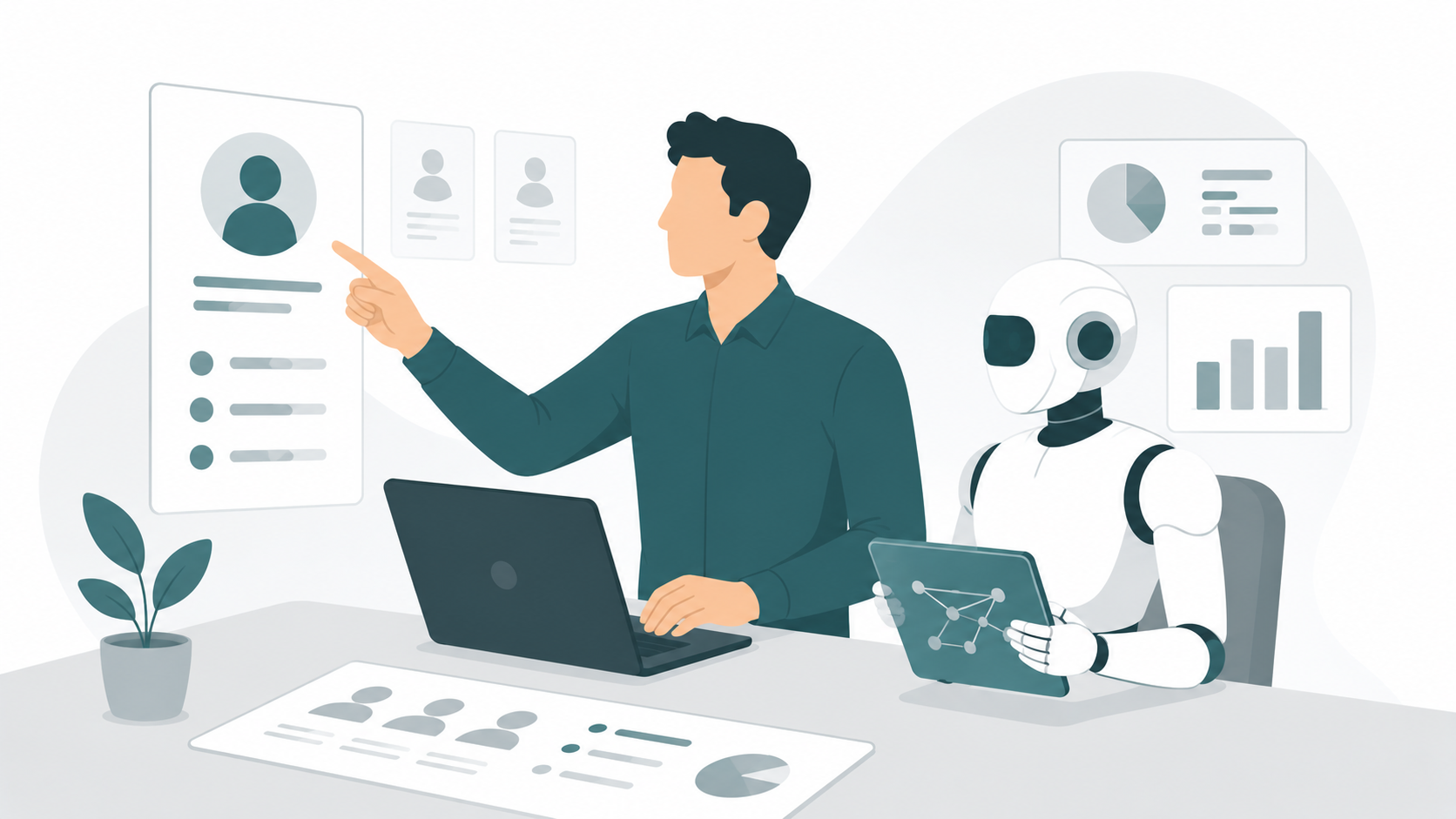
Artificial intelligence in HR is the use of algorithm and machine learning-based technology to automate, accelerate, or support human resource management processes — from CV screening and interview scheduling to employee data analysis.
This trend is real and growing. But there’s an important question rarely discussed directly: where are the limits of AI’s capability in the context of decisions about people?
What AI can automate effectively:
What AI can’t replace:
AI is a powerful tool for efficiency — but the best decisions about people still require people equipped with the right data, not replaced by algorithms.
Cavlent helps complement already-automated HR processes with deeper behavioral data — providing a layer of human insight that AI can’t generate, so final decisions remain grounded in comprehensive understanding.
→ Explore Cavlent’s solutions for better people decision-making
→ What does an employee assessment actually measure?
→ What is people analytics — and why most companies aren’t ready to use it
→ Why skills-based hiring isn’t enough without behavioral data
What does AI in HR mean?
AI in HR is the use of algorithm and machine learning-based technology to automate or support people management processes — from CV screening and interview scheduling to large-scale employee data analysis.
What can’t be replaced by AI in HR processes?
AI can’t read context behind numbers, assess deep behavioral fit, make decisions involving value trade-offs, or build trust in the process of making decisions about people. All of these require human judgment equipped with the right data.
Will AI replace the HR role?
Not entirely. AI is most effective replacing HR work that’s repetitive, structured, and data-based — like initial screening and administrative coordination. But decisions about people involving context, values, and behavioral patterns still require a human role that can’t be fully automated.