Cavlent

CASE STUDY: Sales Team Diagnostic

"Plenty of prospects, but very few closings."

The Context

Organization Profile

  • The company in this study operates in the consumer distribution industry, an industry that heavily relies on the performance of field sales teams.
  • With a distribution network spanning several major cities and ±45 active salespeople, the company has experienced significant growth over the past three years.
  • However, despite the expansion of distribution areas, sales performance remains inconsistent: some regions show strong growth, while others stagnate even though the market potential is large.

Challenges Faced

  • Monthly targets remain unstable even though marketing strategies have been executedv.
  • Follow-up processes are inconsistent, especially in competitive areas.
  • Pipeline data is incomplete, making planning difficult.
  • Closing ratio is low, with many prospects left “hanging”.
  • Senior sales members do not automatically become role models, as their behavioral patterns fit more as planners rather than executors.
  • The Owner and Head of Sales must constantly step in to ensure basic tasks are completed.

Management Expectations Before Cavlent Mapping

Behavioral mapping for ±45 salespeople was conducted as part of the transformation plan and team restructuring, to answer:
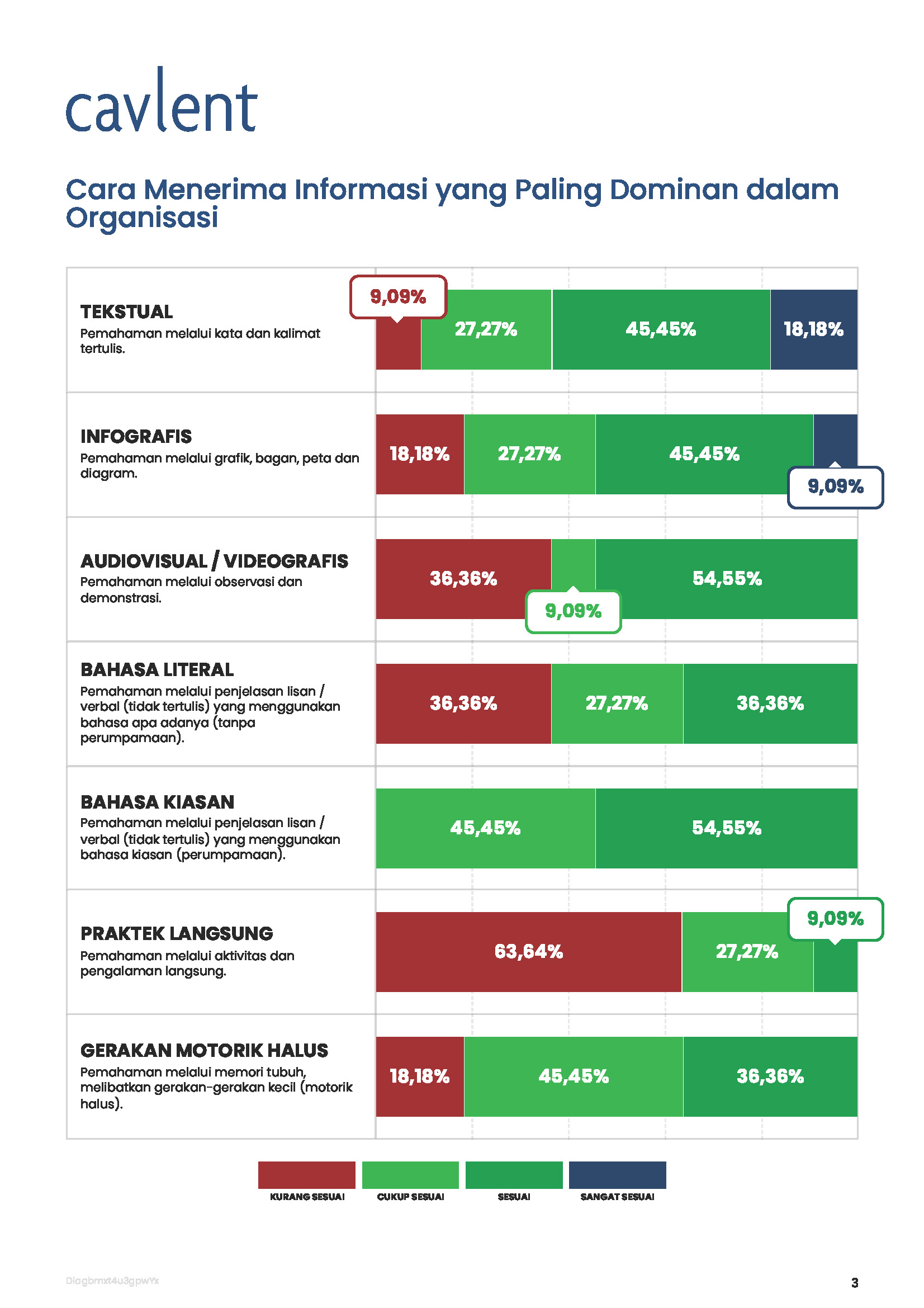
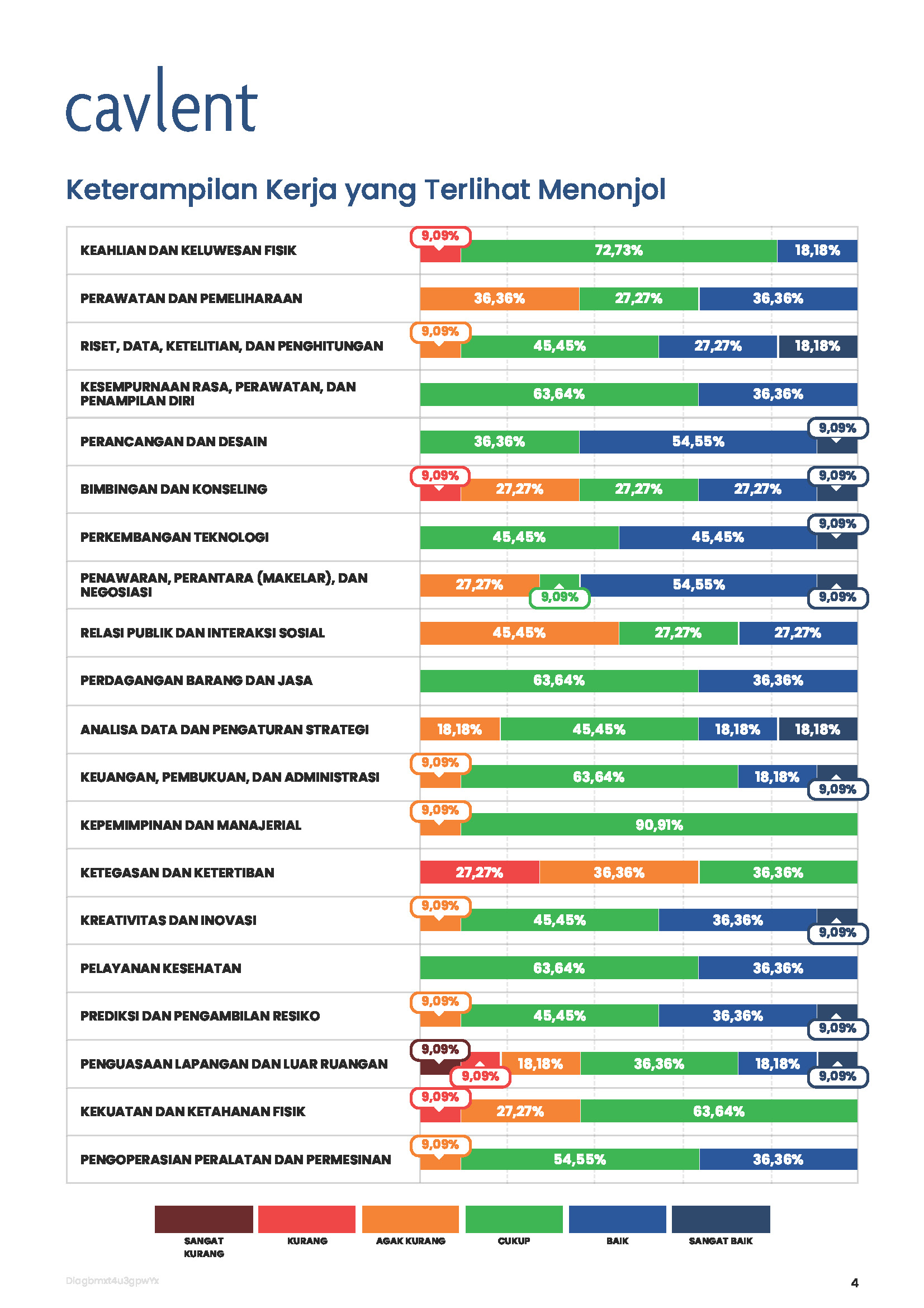
  • Are the team’s behavioral tendencies aligned with the demands of the hunter role?
  • Is the root problem skill, mindset, or structural alignment?
  • Who is suitable for competitive, fast-paced areas, and who is better at managing existing customers?
  • Does the supervision structure need to be reworked?
  • How can coaching programs be designed based on data rather than assumptions?
Disclaimer
  • This report maps soft-skill tendencies and behavioral patterns—not technical abilities—across the entire sales team, to understand the macro-pattern emerging within the organization.
  • The data reflects current behavioral tendencies, which may shift over time based on context, experience, and work environment. Thus, this is not a permanent label but an initial data point to understand working patterns.
  • Transformation decisions must still consider business goals, company culture, financial conditions, current priorities, and external factors.
  • Cavlent serves as an early-stage behavioral navigation tool, not a standalone decision-maker.

Key Findings from Cavlent Mapping

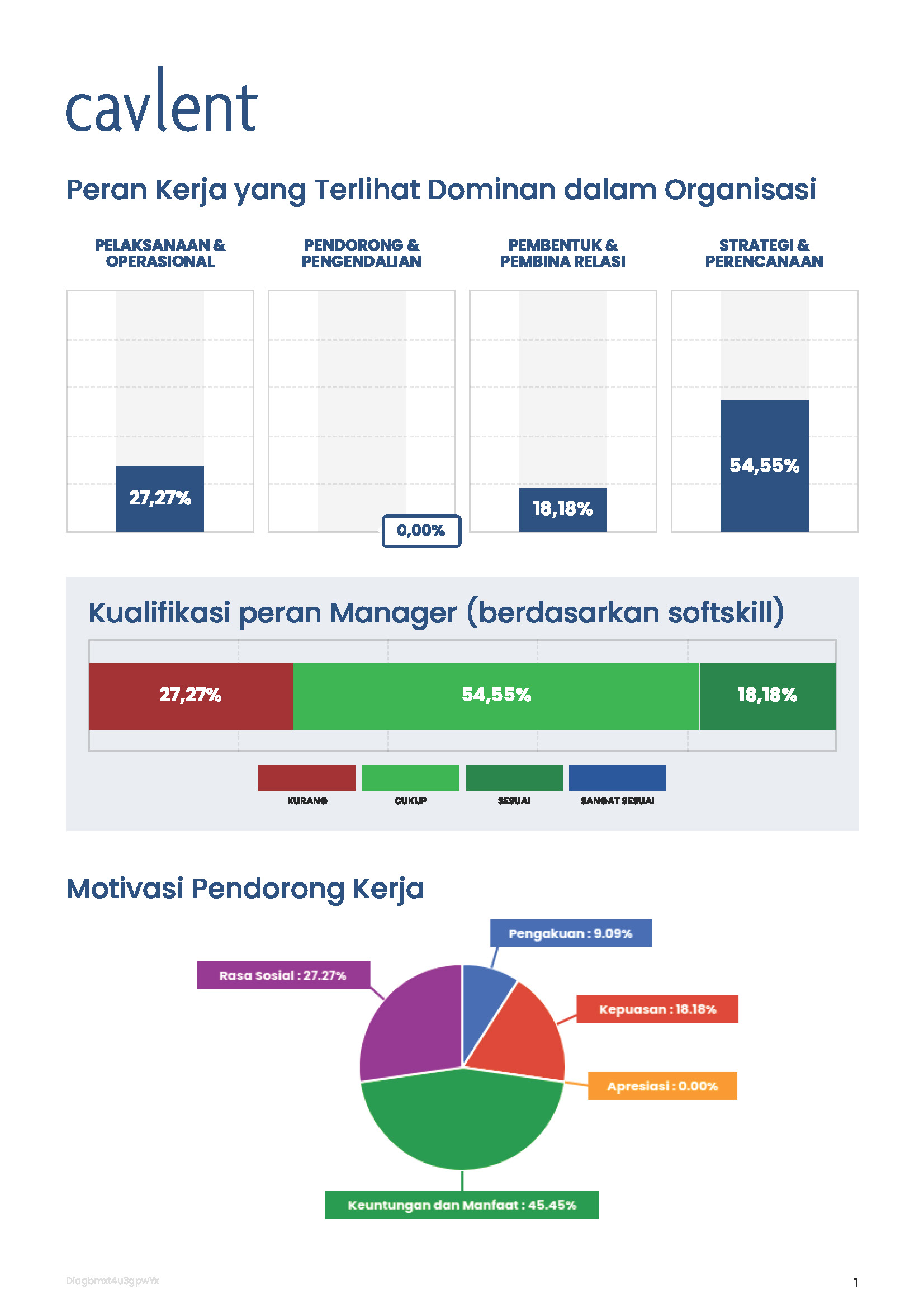
Work Roles Dominated by Strategic Thinkers (54.55%)

  • The majority of sales members show strong tendencies in strategic roles. Meanwhile, 0% score strongly in controlling roles, 18.18% in relational roles, and 27.22% in execution roles.
  • This indicates that the sales team resembles strategic planners more than executors. They tend to think long-term but lack the daily execution discipline required for sales activities such as.
    • fast follow-up,
    • clean and consistent pipeline documentation,
    • repetitive daily routines, and
    • continuous pursuit of closing deals.
  • This helps explain why “the strategy is clear, but nothing moves.” It's not that the team is unwilling—but rather the role expectations do not match their dominant behavioral tendencies.

Work Motivation Dominated by Gains & Benefits (45.45%) — and 0% Driven by Appreciation

  • This motivation pattern makes the team responsive to bonuses but does not build long-term loyalty, competitive drive, or pride in their identity as salespeople.
  • This indicates that a sales culture cannot be built merely from “spirit” or “motivation pep talks.” Incentive systems need precise design, balanced with enforcement of work discipline to prevent performance fluctuations.

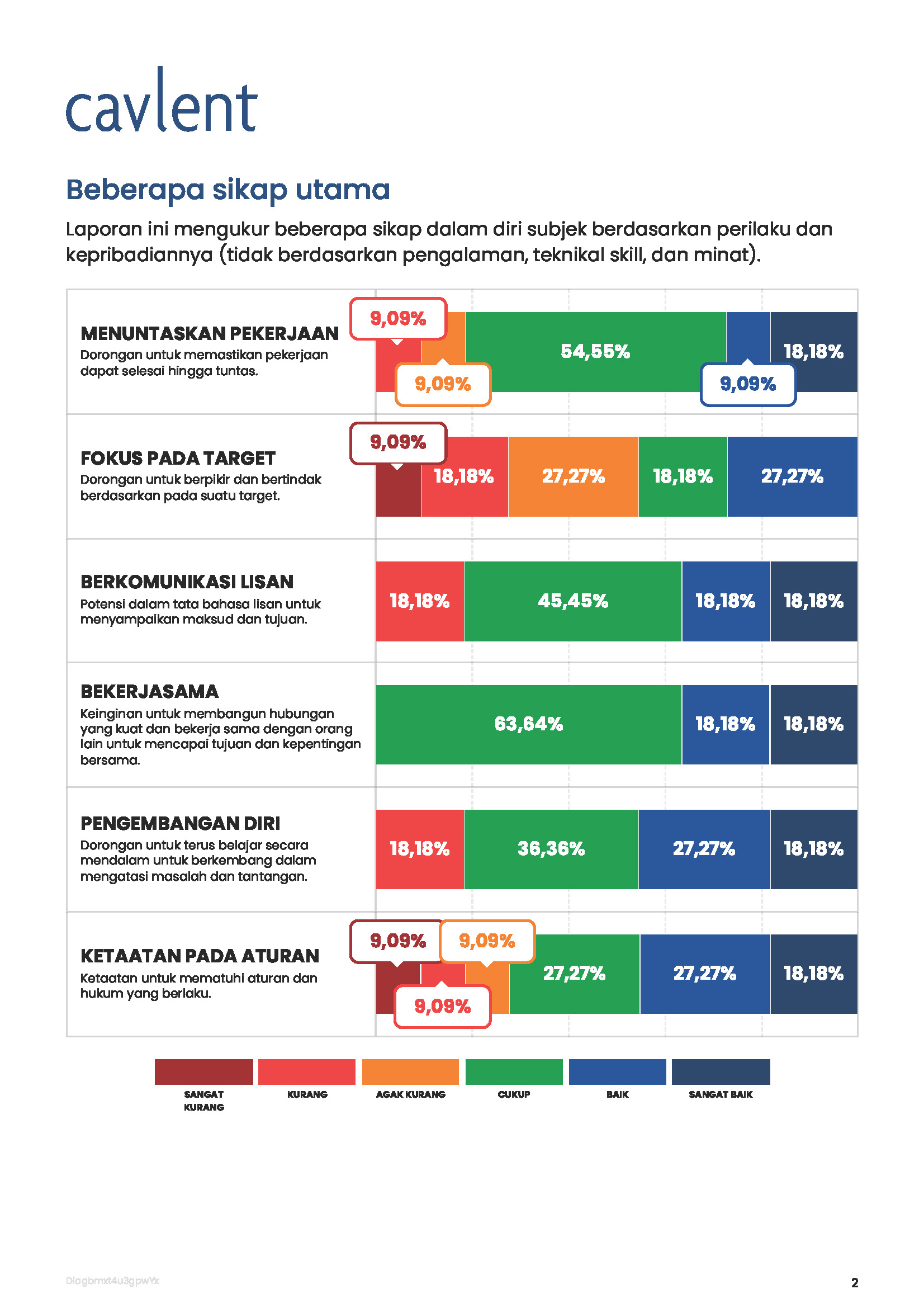
Weak Target & Finishing Mindset (< 30%)

  • Meanwhile, self-development and rule-following mindsets appear strong in ±45% of the team.
  • The team tends to enjoy learning new things, following SOPs, and understanding processes. But they lack the drive to close deals, maintain speed, and pursue targets, especially when the company lacks clear rules or structure.

Strong Pitching Skills (>60%), but Weak in Public Relations, Assertiveness, and Field Mastery

  • The mapping reveals a highly contrasting pattern:
    • More than 60% strong in offering & negotiation.
    • 36% strong in data analysis.
    • Less than 30% strong in public relations & social interaction.
    • More than 63% weak in assertiveness & orderliness.
    • Less than 30% strong in field mastery.
  • These findings indicate that while the team can pitch well and offer products convincingly, they lack the behavioral foundation required to make sales effective and complete:
    • Strong pitch, but mentally unprepared to handle objections.
    • Relationships unsustained (low retention).

Obvious Patterns Across the Entire Sales Team

Great Pitch, but Mentally Unprepared for Objections

  • Salespeople can present products well, but when customers request discounts, compare with competitors, or express initial resistance, they lack the assertiveness needed to steer the conversation back to value.
  • As a result, closing opportunities disappear even though the opening was strong and promising.

Relationships Do Not Sustain (Low Retention)

  • With less than 30% strong in public relations, many salespeople struggle to build long-term relationships, create rapport, or maintain human-centered follow-ups.
  • This leads to a common complaint from owners: “Customers buy once, and then they disappear".

Inconsistent Reporting & Follow-up

  • Weak orderliness and low assertiveness lead to inconsistent documentation, poor monitoring of prospects, reporting only when asked, and high susceptibility to distractions from field con's really happening.
  • Poor data quality results in owners being “blind” to what’s really happening.

Weak Field Mastery: Lots of Activity, Little Impact

  • Salespeople often get confused when field conditions change, fail to read spontaneous opportunities, respond slowly when competitors are aggressive, and struggle when SOPs are unavailable.
  • They show up physically, but do not always deliver meaningful outcomes.

Hesitant in Making Quick Decisions

  • Due to low assertiveness and weak field mastery, salespeople tend to delay decisions, wait for approval, play it safe, and lose momentum.
  • In the distribution industry, a delay of even 5-10 minutes can lead to competitors capturing the customer.

Key Insight

Pitching skills matter, but they will not produce stable sales results without assertiveness, orderliness, situational awareness, relationship-building capability, and quick decision-making.

In other words: “Being able to talk” ≠ “being able to sell.” What makes the difference is mindset and behavior in execution—not verbal skill alone.

Relevance of Mapping Results For:

Business Coach

This case demonstrates that sales performance issues can stem from behavioral mismatch, not merely lack of skill.

Cavlent data helps coaches avoid generalizations and design far more precise intervention program and effective coaching plans. For example (based on this company’s findings):

  • Coaching interventions focus on execution mindset, assertiveness, and discipline in pipeline management.
  • Helps define clearer segmentation: hunter, farmer, and support.

Relevance of Mapping Results For:

Owner

Owners can finally see the root causes, not just the symptoms.

Not “a lazy team,” but a team shaped by mismatched structure, misplaced roles, ineffective motivation mechanisms, and weak working rhythm.

Owners can make decisions with much higher confidence.

Including area restructuring, identifying who should lead branches, optimizing incentive systems, and redesigning sales SOPs to align with business objectives.

Owners no longer need to micro-manage.

Mapping helps identify who needs tight supervision, who can be independent, and who needs a new role.

*(Individual-level insights are available in a separate report not included in this PDF).

Owners can reduce the cost of wrong hiring and role placement.

With this data, owners no longer place people based on “seniority” or “years in the company,” but based on behavioral fit.

About Cavlent

For decision-makers prioritizing speed and precision, Cavlent is a transformation navigator offering behavior-based team mapping. We identify soft skill mismatches and hidden risks in team dynamics through same-day insights, compared to traditional methods that are time-consuming and rely on manual processes.

For more information, contact:

  • Ayu / +62.851.8655.0077 (WA)
  • Afi / +62.852.1521.0077 (WA)
© Copyright 2026 Cavlent
Contact
Us