

Subjectivity in candidate screening happens when hiring decisions are shaped more by personal judgment, unconscious bias, or inconsistent impressions between interviewers than by a shared evaluation standard applied to every candidate.
The problem is that personal judgment is never fully neutral. Two interviewers can meet the same candidate and walk away with different conclusions. One might describe the candidate as “confident,” while another sees the same behavior as “too dominant.” A candidate can be labeled “not a fit” simply because their communication style doesn’t match what the interviewer expected.
This is why companies need to start reducing subjectivity in candidate screening. The goal isn’t to remove human judgment from hiring, but to make the evaluation process more structured, consistent, and data-informed.
Subjectivity in hiring usually isn’t a result of HR or hiring managers being incompetent. Bias tends to creep in when the screening process simply lacks enough structure.

Some of the most common causes are:
1. “What makes a good candidate” is never clearly defined upfront
Many hiring processes start with a job description, but not always with clear evaluation criteria. As a result, everyone involved brings their own standard to the table.
A recruiter might focus on work experience. A user (the team that will work with the hire) might focus on technical skills. A hiring manager might pay closer attention to how the candidate speaks. A founder or business owner might judge based on “gut feeling” alone.
All of these perspectives matter, but if they aren’t aligned from the start, the screening process easily becomes inconsistent.
2. Interviews rely too heavily on first impressions
Candidates who are articulate, well put-together, and quick to respond often come across as more convincing early on. But a first impression doesn’t always reflect actual job performance, behavioral fit, or long-term potential.
On the other hand, a candidate who is quieter or needs more time to think might actually have strong analytical skills, yet appear less impressive in an unstructured interview.
When interviews lean too heavily on overall impression, hiring decisions end up shaped more by a candidate’s presentation style than by the qualities the role actually requires.
3. Interview questions differ from one candidate to the next
When each candidate is asked different questions, comparing them fairly becomes much harder. Candidate A might get deep technical questions, while Candidate B is only asked about general experience.
This inconsistency makes evaluation far from apples-to-apples. In the end, a candidate may come across as better or worse not because of their actual quality, but simply because of the different questions they happened to receive.
4. Behavioral data isn’t being used to support decisions
A CV and an interview only show part of who a candidate really is. A CV reveals experience, but not necessarily how someone works, communicates, what motivates them, what behavioral risks they carry, or how well they’d fit the company culture.
Interviews can uncover some of this, but they still depend heavily on the interviewer’s ability to read subtle signals. This is where behavioral data, or people mapping, can help companies see candidates from a more objective angle.
Subjectivity in candidate screening isn’t just an HR process issue. Its effects can ripple all the way into team quality and overall organizational performance.
When subjectivity runs too high, companies risk facing the following:
• Genuinely strong candidates get passed over simply because they don’t match an interviewer’s personal preference.
• Candidates who seemed convincing in the interview turn out not to fit how the team actually works.
• Hiring managers struggle to compare candidates because there’s no shared evaluation standard.
• The hiring process drags on longer because decisions keep shifting.
• Turnover increases because job-fit or culture-fit wasn’t properly assessed from the start.
On a small scale, this might look like an ordinary hiring mistake. But when it happens repeatedly, companies end up losing significant time, cost, and energy fixing mismatches that could have been caught much earlier.
Reducing subjectivity doesn’t mean making the hiring process rigid or fully automated. A good process still leaves room for human judgment, but supports it with clearer structure and data.
Here are several ways to do that.
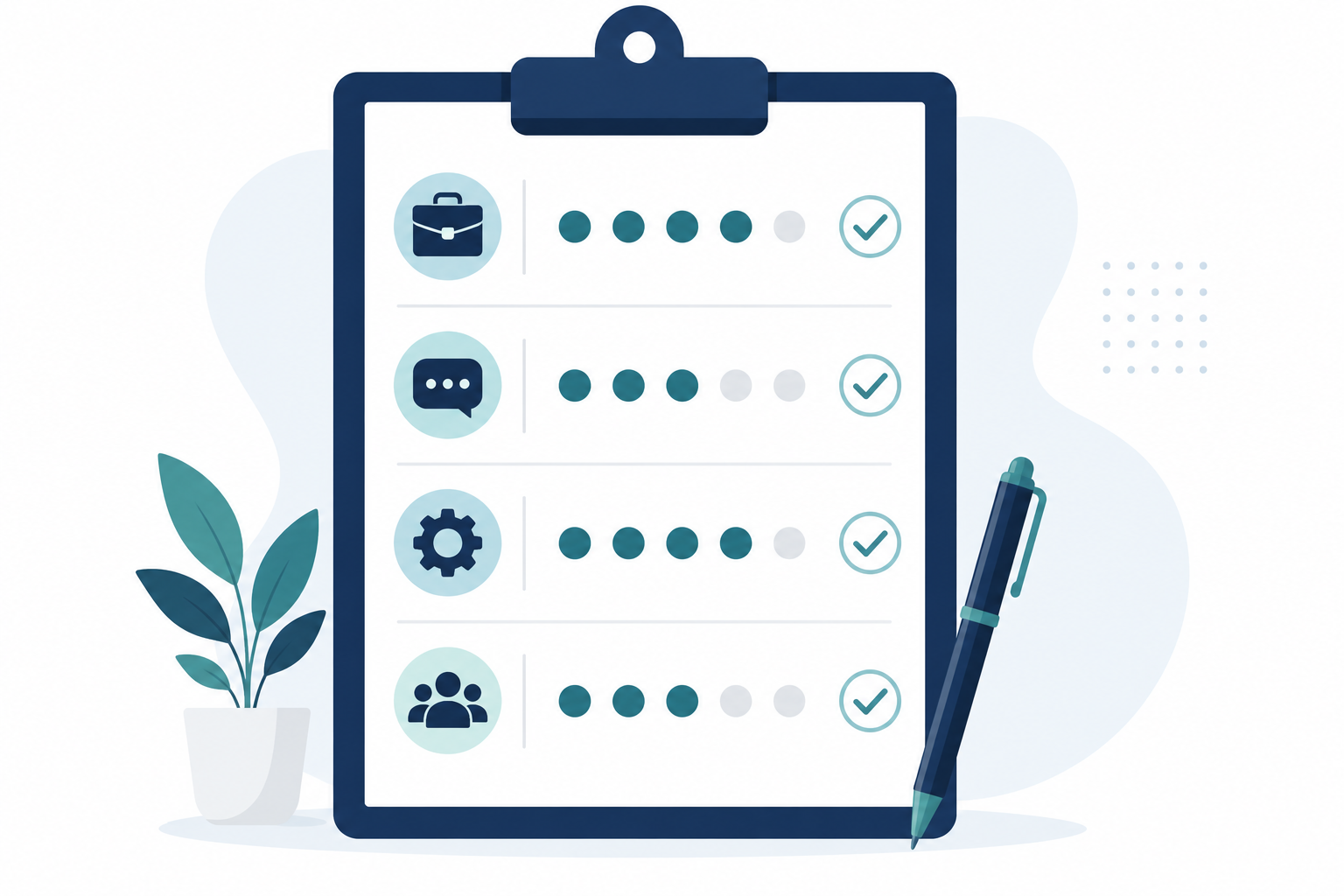
1. Define Evaluation Criteria Before Meeting Candidates
The first step is agreeing on exactly what needs to be assessed before the screening process even begins.
These criteria can include:
• Relevant experience
• Technical skills
• Critical thinking and problem-solving
• Communication skills
• Work motivation
• Role fit
• Alignment with company values and culture
• Behavioral risks worth noting
With clear criteria in place, interviewers aren’t left evaluating candidates based purely on general impressions. Everyone shares the same guide to determine whether a candidate genuinely fits what the role requires.
2. Separate the Evaluation of Skills, Behavior, and Culture Fit
One common mistake in screening is collapsing every aspect of a candidate into a single verdict: “fit” or “not fit.”
In reality, a candidate can be strong in one area while still needing further evaluation in another. For example:
• A candidate has solid technical skills, but their communication style still needs to be tested further.
• A candidate is highly communicative, but their technical experience isn’t quite there yet.
• A candidate has relevant experience, but their working style may not match the team’s dynamics.
• A candidate shows leadership potential, but may not be the right fit for a highly individual-contributor role.
By separating these areas of evaluation, companies can make clearer decisions. A candidate isn’t immediately rejected for one weakness, nor immediately approved for just one strength.
3. Use Structured Interviews
Structured interviews help companies compare candidates more fairly, since every candidate is evaluated against relatively the same questions and criteria.
In a structured interview, companies can prepare questions based on the role’s core competencies. For example:
• For a sales role: how does the candidate handle customer objections?
• For a customer service role: how does the candidate deal with an upset customer?
• For a supervisor role: how does the candidate give feedback to team members?
• For an operations role: how does the candidate prioritize when multiple issues arise at once?
Scenario-based questions like these are far more useful than generic ones, because they let interviewers observe a candidate’s thinking process, judgment, and real-world responses in a more realistic work context.
To make this process even more consistent, hiring teams can also use a tool like KitaHQ to support early-stage interview evaluation. With an AI interview assessment approach, recruiters can review candidate responses against more structured criteria, so evaluation doesn’t rely solely on an interviewer’s initial impression.

4. Use a Consistent Scoring Rubric
A rubric helps interviewers evaluate candidates against clearer indicators. Without one, a score of 4 out of 5 can mean very different things to different interviewers.
For example, when scoring a candidate’s communication skills, a rubric might distinguish:
• Low score: the answer is unclear, doesn’t address the core question, or is overly generic.
• Medium score: the answer is reasonably clear, but lacks concrete examples.
• High score: the answer is clear, relevant, well-structured, and demonstrates contextual understanding.
A rubric doesn’t turn decision-making into a purely mechanical process. But it does help every reviewer understand and apply the same standard when assessing candidates.
5. Complement Interviews with People Mapping
Interviews help you understand a candidate’s answers, but they’re not always enough to fully read someone’s behavioral patterns.
This is where people mapping, or behavioral mapping, becomes relevant. One platform built specifically for this is Cavlent, a behavioral team mapping platform that maps a candidate’s behavioral tendencies, work motivation, potential, and work-related risks in under 20 minutes, with insights available the same day.
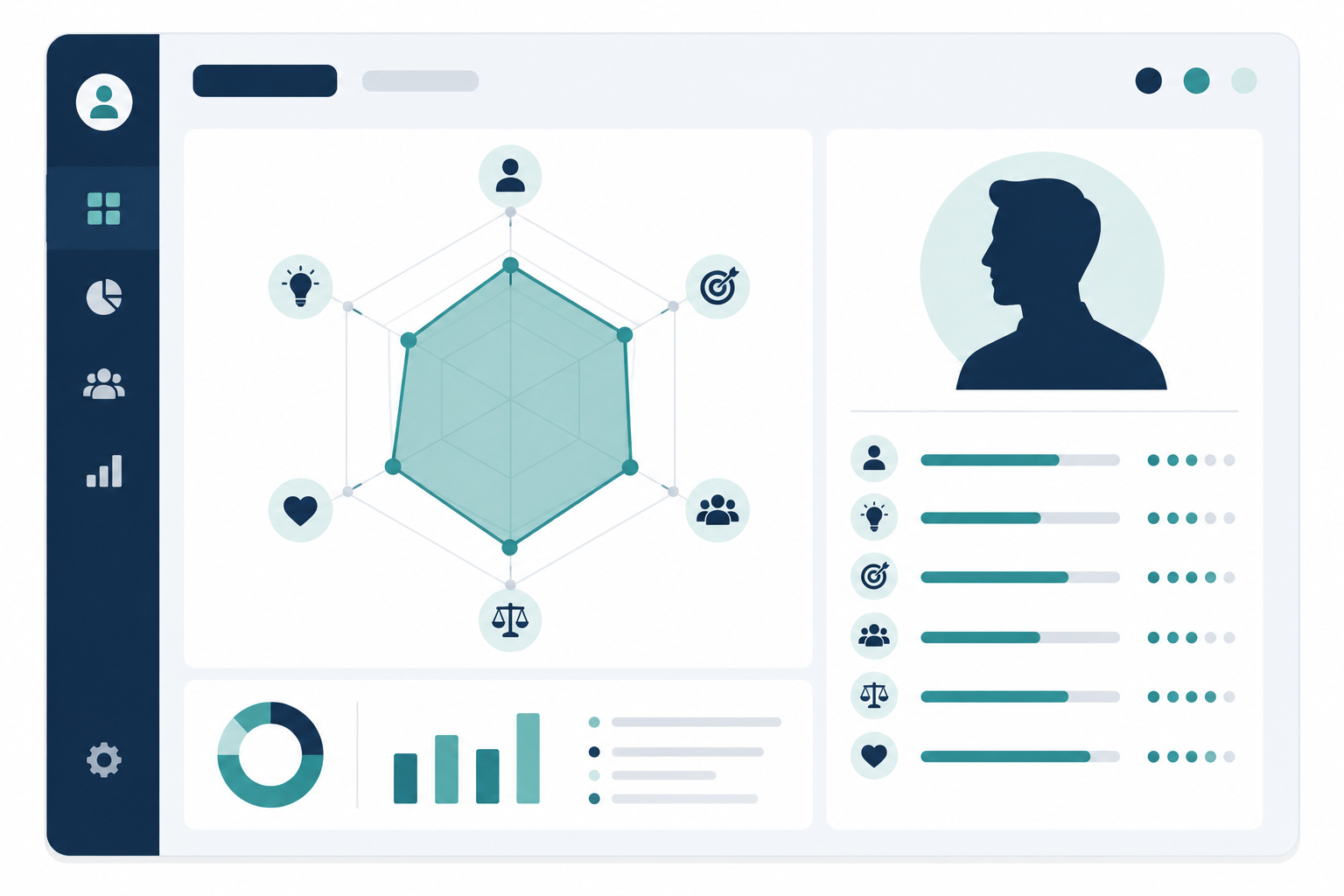
With behavioral mapping data from Cavlent, companies can answer questions that interviews alone often can’t:
• How does the candidate tend to work within a team?
• Are they stronger in execution, coordination, analysis, or relationship-building?
• What behavioral risks should be anticipated?
• Is the candidate better suited for a fast-paced, stable, structured, or flexible work environment?
• Does the candidate align with the current team’s values and dynamics?
This kind of data shouldn’t be the sole basis for a decision. But behavioral data can serve as a strong discussion point, so the screening process doesn’t rely purely on personal impressions.
6. Use Interview Data to Compare Candidates
Beyond people mapping, companies can also use data from interview answers to make the review process more consistent.
For instance, when candidates respond to scenario-based questions, the hiring team can score those answers against the same aspects: structure, relevance, problem-solving, communication, and understanding of the role.
Interview data also helps reviewers revisit the reasoning behind a candidate’s evaluation. This way, hiring discussions don’t rely solely on memory or impressions from the interview itself, but on documented answers and evaluation indicators that everyone can review together.
7. Don’t Treat Data as the Final Verdict
Good data shouldn’t shut down discussion. It should actually open up clearer conversations.
If a mapping result flags a particular risk, the company still needs to understand the context. Is that risk genuinely critical for the role? Can it be managed with the right work structure? Does the candidate bring other relevant strengths to the table?
The same applies to interview assessment results. Scores or answer summaries should serve as material for review, not a final decision.
The underlying principle: data helps companies see more clearly. But the decision still needs to account for business context, team needs, hiring urgency, and human judgment.
Interviews and behavioral mapping are two different things, and they complement each other. KitaHQ helps companies run first-stage interviews in a structured, consistent way through AI video interviews — every candidate receives the same questions, with no scheduling required, and an automated report the hiring team can review right away.
Cavlent complements this with behavioral mapping — data on how a candidate tends to work, what motivates them, and what behavioral risks need to be anticipated before a hiring decision is made.
Together, the two give companies a view of candidates from two distinct angles: what a candidate says during an interview, and how they tend to actually behave in real work settings.

Subjectivity in candidate screening can’t be eliminated entirely, but it can be reduced through a more structured process and more relevant data.
A CV shows experience. An interview reveals thinking and communication style. People mapping reveals behavioral patterns and potential. Criteria-based assessment helps standardize how candidates are evaluated against one another.
When all of these elements are used together, companies can build a hiring process that’s more objective, more consistent, and better equipped to support the right decisions.
Ultimately, the goal of screening isn’t to find the candidate who looks best on the surface, but to find the candidate who is genuinely the best fit for the role, the team, and the direction of the organization.
Read Also:
→ How Much Does a Bad Hire Really Cost a Company? Here’s the Math
→ How to Read a Behavioral Mapping Report for Candidate Screening
→ 5 Types of Talent Assessments and When to Use Each One
What is meant by subjectivity in candidate screening?
Subjectivity in screening refers to hiring decisions being shaped more by personal judgment, unconscious bias, or inconsistent impressions between interviewers — rather than by a shared evaluation standard applied to every candidate.
What’s the impact of high subjectivity in the hiring process?
High subjectivity can cause potential candidates to be overlooked, candidates who seemed convincing in interviews to turn out not to fit the team, hiring processes to drag on longer, and turnover to increase because job-fit or culture-fit wasn’t assessed properly from the start. Research from SHRM estimates that the cost of a bad hire can reach 3–5 times the position’s annual salary.
What’s the difference between a regular interview and a structured interview?
A regular interview doesn’t use the same set of questions for every candidate, making comparisons far from apples-to-apples. A structured interview uses the same questions and scoring rubric for every candidate — making evaluation more consistent and fair. KitaHQ helps automate this process through AI video interviews.
What is behavioral mapping, and how is it different from an interview?
An interview explores a candidate’s verbal answers to prepared questions. Behavioral mapping maps a candidate’s behavioral tendencies, work motivation, and potential risks more objectively — independent of how well the candidate can answer questions. Cavlent provides behavioral mapping with insights available in under 20 minutes.
How can KitaHQ and Cavlent be used together?
KitaHQ handles the first-round interview stage in a structured, automated way — ensuring every candidate is evaluated against the same standard. Cavlent complements this with behavioral mapping data that reveals work patterns and potential risks before a final decision is made. Together, they help companies make hiring decisions that are more objective and more complete.
Can behavioral mapping data replace interviews?
No — and it shouldn’t. Behavioral mapping data is meant to complement, not replace, human judgment and the interview process. The underlying principle: data helps you see more clearly, but the decision still requires context, business considerations, and human judgment.