

An organizational transformation program is a structured set of processes that helps an organization move from its current state to a more effective one — encompassing diagnosis, capability development, and relevant system changes.
One of the decisions most often overlooked before starting: choosing a program scope that genuinely fits the organization’s scale and readiness.
A program that’s too limited won’t reach the root of the problem. A program that’s too broad can overwhelm an organization that doesn’t yet have the capacity to absorb and implement large-scale change.
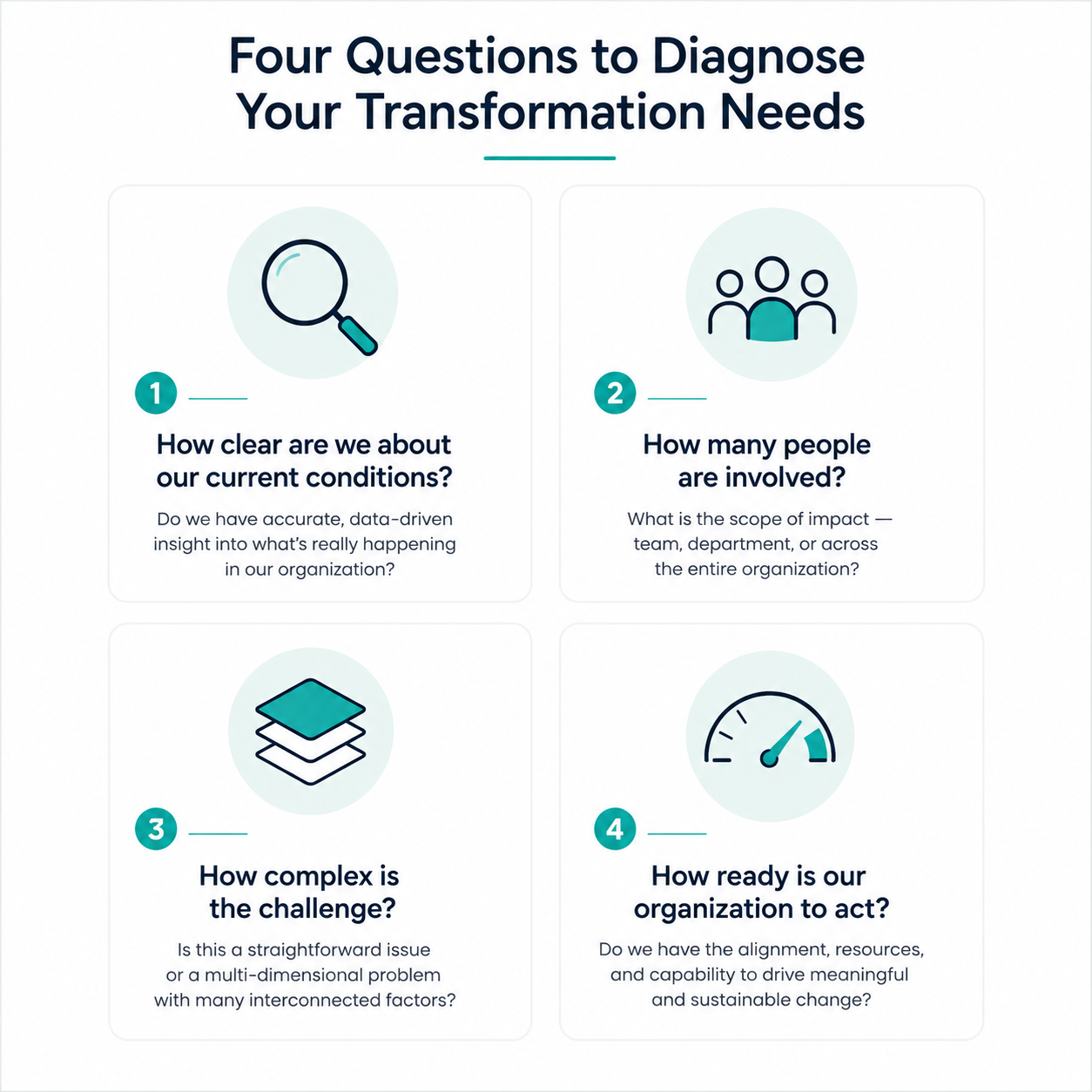
1. How clear is the initial picture of the organization’s current condition?
If the organization doesn’t yet have data on HR conditions, leadership patterns, or existing gaps — the most appropriate starting point is an initial assessment that provides an objective picture before any steps are designed. Starting a large program without a clear baseline risks missing the actual target.
2. How many people need to be involved?
The scale of involvement determines program complexity. An organization with 20 key people has very different needs from one with 100 people across multiple units and levels. The larger the number involved, the more important structure and accompaniment become for maintaining process consistency.
3. How complex is the problem being solved?
There’s a significant difference between “wanting to understand team conditions before restructuring” and “wanting to build an effective leadership system across 3 management levels.” The first can be addressed with structured diagnosis. The second requires longer and deeper accompaniment.
4. How ready is the organization to change?
Readiness for change isn’t just about intent — it’s about the system’s capacity to absorb change without losing operational stability. An organization under high pressure or in major transition may be better served starting with a more focused program before entering more comprehensive transformation.
What works best:
Start with what’s most relevant to current conditions — not what’s most ambitious. A successful transformation program isn’t the largest one, but the one most suited to the organization’s actual capacity and needs at the phase it’s currently facing.
Cavlent helps organizations determine the most appropriate starting point — based on actual conditions, not assumptions about what “should” be needed.
→ Explore Cavlent’s solutions for various organizational scales and needs
→ The difference between a standalone assessment and a guided transformation program
→ Signs your organization is ready to scale — and signs it isn’t
→ After the assessment, what happens next? From data to change priorities
How do you choose the right transformation program for your organization?
Start with four questions: how clear is the initial picture of organizational conditions, how many people need to be involved, how complex is the problem being solved, and how ready is the organization to change. The answers to these four questions will determine the most appropriate program scope for the actual situation.
Is it better to choose a larger program for maximum results?
Not necessarily. A program too large for the organization’s current capacity can overwhelm the system and actually hinder effective implementation. The most impactful program is the one most suited to actual capacity and readiness — not the most ambitious one.
What if you don’t know where to start?
Start with an initial assessment that provides an objective picture of actual conditions. Data from this assessment will answer the above questions more clearly — so decisions about the next program scope can be made based on facts, not assumptions.