

Training needs analysis (TNA) is the process of identifying the gap between an organization’s current people condition and what’s needed to achieve organizational goals — then determining what training or development would most effectively bridge that gap.
This is a step that should always precede training budget decisions. But it’s often skipped.
Not because the training isn’t good quality — but because it isn’t the right fit.
Organizations often choose training programs based on what’s currently popular, what’s been done before, or what employees request. Without deeper needs analysis, the result is training that’s engaging but doesn’t address the problems actually limiting performance.
Someone struggling in their role because their working patterns don’t fit the position’s demands won’t be helped by any technical skills training. Someone losing motivation because there’s no clear career direction won’t be helped by generic leadership training.
Organizational level — what strategic goals are being pursued, and what people-level gaps are preventing their achievement?
Role level — what competencies and working patterns are needed for each role to contribute optimally to those goals?
Individual level — where are the gaps between someone’s actual condition and what their role requires? Is this about skill, knowledge, or actually about behavioral patterns and motivation that are more fundamental?
This third level is most often not answered with adequate data — and it’s the most determinative of whether designed training programs will actually create impact.
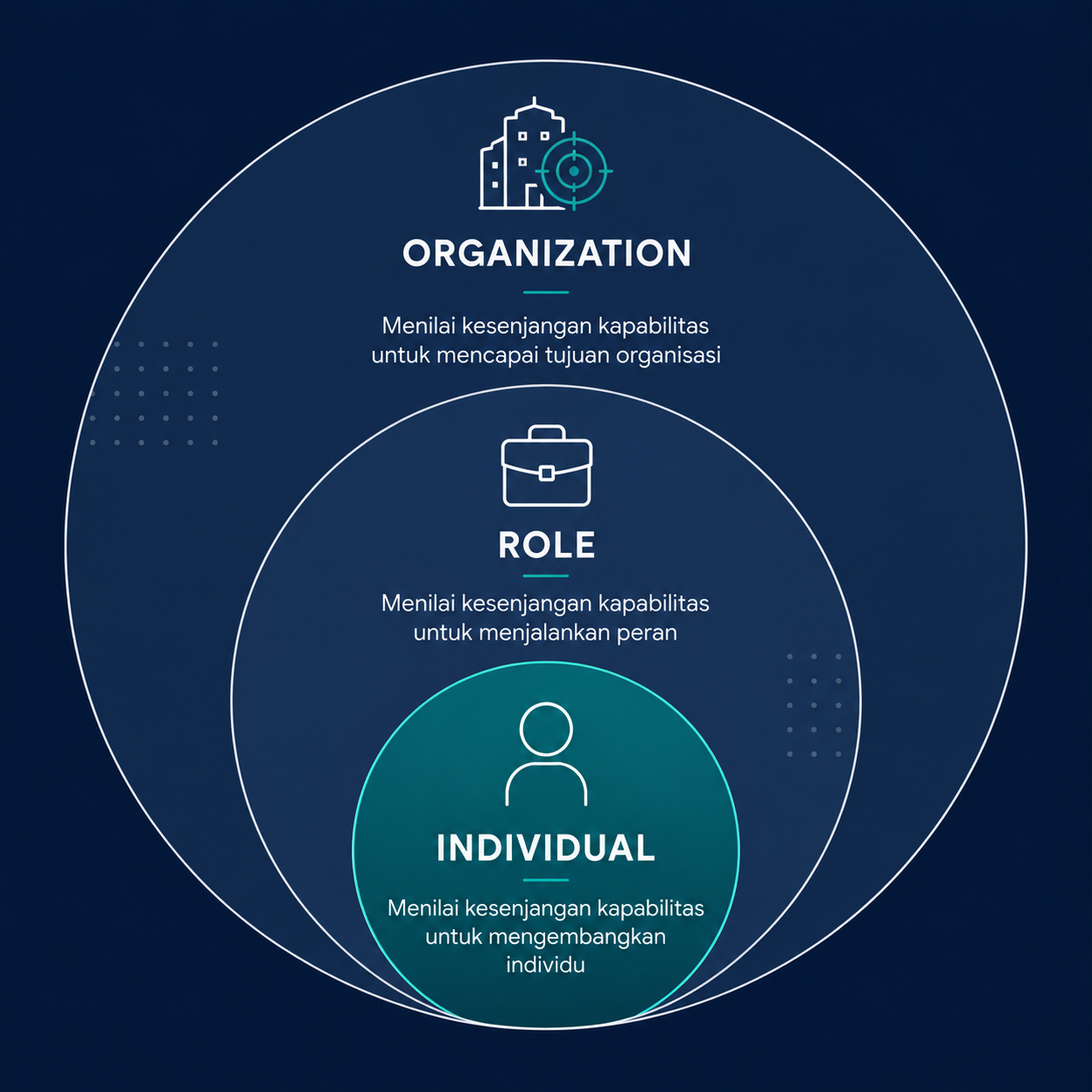
Behavioral data helps answer a question that performance evaluations or manager feedback alone can’t: is the gap actually about a skill that can be trained, or about a behavioral pattern that requires a different approach?
This is a critical distinction. Skills can be trained in a relatively short time. Behavioral patterns require a different approach — not just training, but possibly role repositioning, work context changes, or more personalized coaching.
With behavioral data, TNA produces far more targeted recommendations — not just a list of training to attend, but a deeper understanding of what each individual actually needs to develop.
Cavlent helps organizations strengthen their TNA process with objective behavioral data — identifying not just skill gaps, but also behavioral patterns and motivation that determine whether training investment will actually produce real change.
→ Explore Cavlent’s solutions for training needs analysis
→ What is skills mismatch — and why it’s quietly hurting your business
→ Is this a system problem or an individual problem? 5 questions to tell the difference
→ What is people analytics — and why most companies aren’t ready to use it
What is training needs analysis (TNA)?
Training needs analysis is the process of identifying the gap between an organization’s current people condition and what’s needed to achieve organizational goals — then determining what training or development would most effectively bridge that gap. It’s a step that should always precede training budget decisions.
Why is TNA important before deciding on training programs?
Because without deep needs analysis, organizations risk choosing training based on popularity or habit — not based on what’s genuinely needed. Training that doesn’t address the real root cause won’t produce meaningful performance change.
How does behavioral data strengthen the TNA process?
Behavioral data helps identify whether the gap is actually about a trainable skill, or about a behavioral pattern requiring a different approach. This distinction is critical in determining the most effective type of intervention — training, role repositioning, coaching, or a combination of all three.