
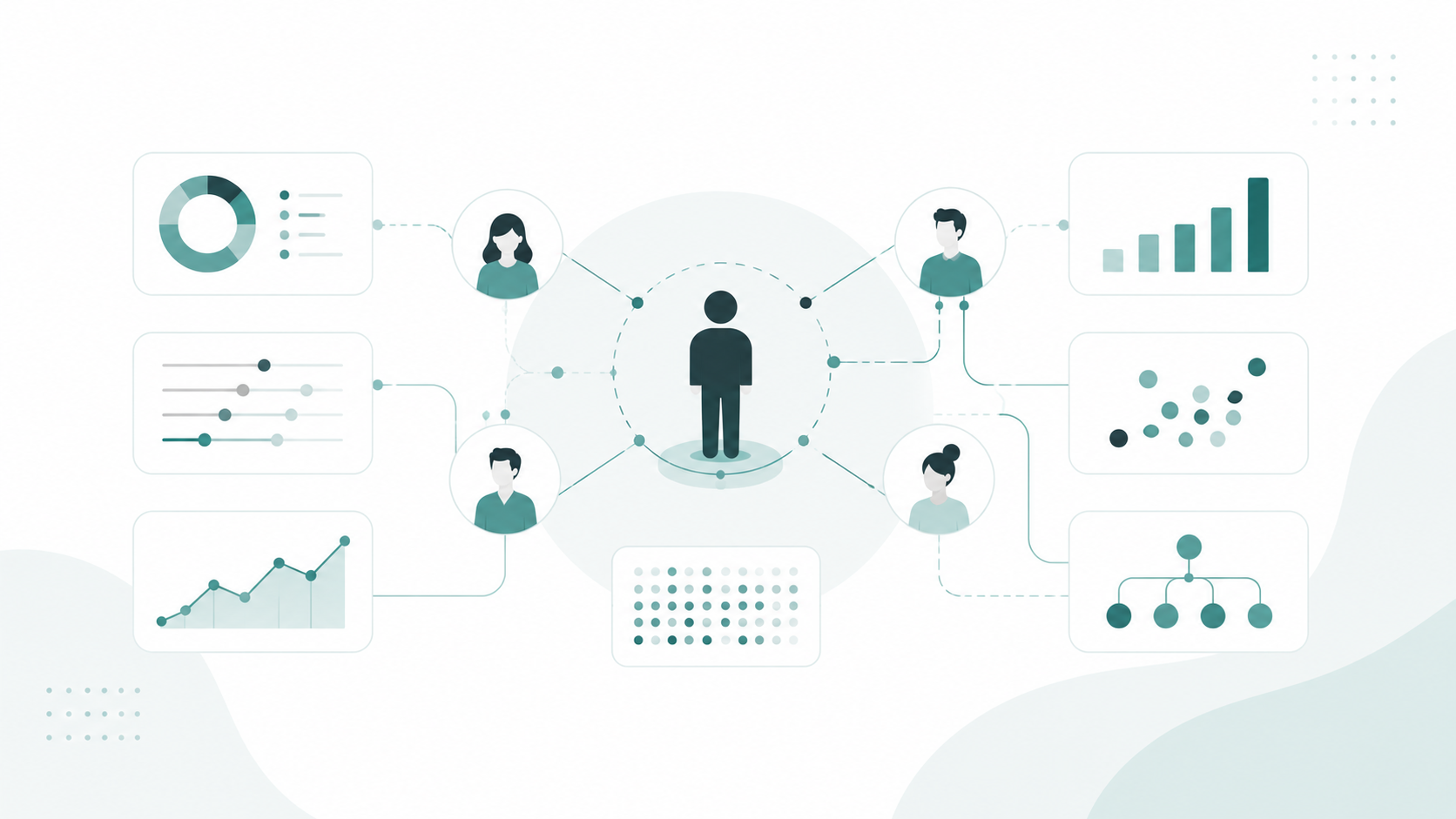
People analytics is the use of data about people in an organization — behavior, performance, working patterns, motivation — to support more objective, evidence-based business decisions rather than intuition alone.
This isn’t just having an HR dashboard that displays headcount, absenteeism rates, or recruitment costs. Real people analytics answers deeper questions: Who on this team is most at risk of resigning in the next 6 months? Does the current team composition support next year’s expansion target? Why does Team A consistently outperform Team B when their job descriptions are the same?
But there’s a reason many companies — including those with sophisticated HRIS systems — haven’t truly leveraged it:
The data being collected isn’t the data needed for decisions
Many HR systems collect transactional data — attendance, payroll, training hours. But strategic people decisions require behavioral data — how someone works, what motivates them, and how their working patterns interact with the team.
Too much data, too little insight
Having a lot of data doesn’t mean having actionable insight. The biggest challenge isn’t collecting data, but turning it into concrete recommendations that decision-makers can act on directly.
People analytics is treated as IT or data science, not HR
As a result, the people who understand the business context most aren’t involved in interpreting the data — and the insights produced are often disconnected from the real problems on the ground.
Effective people analytics starts with the right data — including behavioral data that shows how someone actually works, not just what’s written in their job description.
Cavlent helps companies build a behavioral data foundation that can be used directly as the basis for people decisions — hiring, promotion, restructuring, and team development — in under 20 minutes per person.
→ Learn about Cavlent’s approach to generating actionable people insights
→ What does an employee assessment actually measure?
→ When should a company do a team mapping?
→ When the data is already there, but change still doesn’t happen
What is people analytics?
People analytics is the use of data about people in an organization — behavior, performance, working patterns, motivation — to support more objective, evidence-based business decisions. This is different from simply having an HR dashboard that displays operational numbers.
What’s the difference between people analytics and HR analytics?
The two terms are often used interchangeably, but people analytics typically has a broader scope — not just about HR functions, but about how people data can support overall business decisions, including strategy, expansion, and organizational transformation.
Why haven’t most companies succeeded in leveraging people analytics?
Three most common barriers: the data being collected isn’t the data needed for strategic decisions, too much data but too little actionable insight, and people analytics being treated as a technical domain rather than a business decision-making tool.