

A corporate assessment is the process of evaluating an organization’s human resource condition holistically — encompassing behavioral patterns, leadership capacity, team readiness, and cultural dynamics — as the foundation for more informed strategic decision-making.
This isn’t just collecting individual data one by one. A corporate assessment looks at the organization as a system — how the people within it work collectively, where its strengths lie, where its risks are, and what needs to be strengthened before the organization can move more effectively.
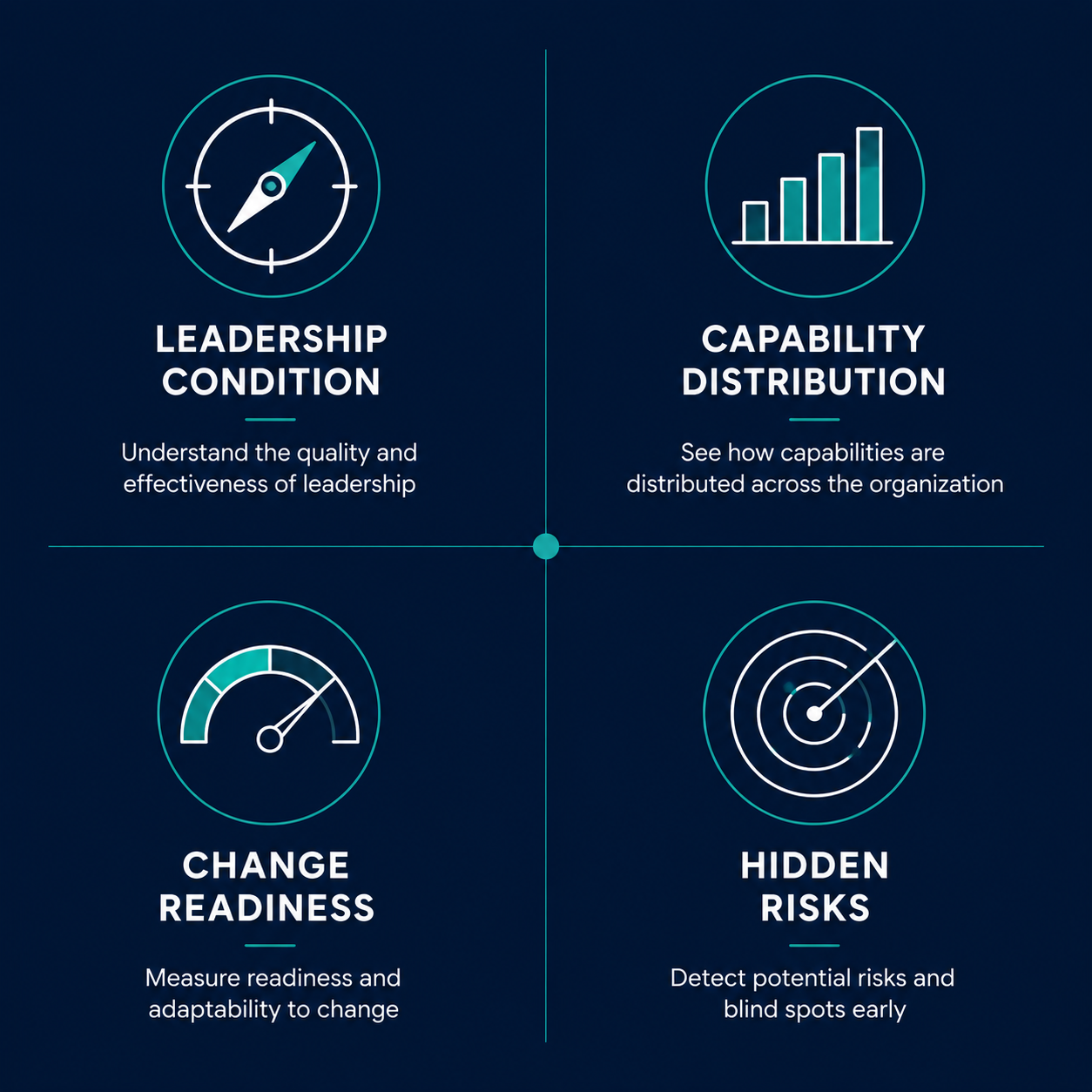
Leadership condition — do leaders at various levels have the capacity and working patterns suited to the organization’s current and future demands?
Team capability distribution — where do the team’s collective strengths lie, where are the gaps that need filling, and does the current team composition support the targets being pursued?
Readiness for change — how ready is the organization — from the human side, not just systems and processes — to implement changes being designed or planned?
Risks not yet visible — what behavioral patterns or dynamics currently aren’t major problems but could become serious barriers if not addressed earlier?
When an organization is about to undertake major restructuring or reorganization. When there’s a senior leadership change that requires understanding the conditions of the team being led. When a business is entering a significant growth phase and needs to ensure its core team is ready. Or when there are signs something isn’t working well — but it’s difficult to identify from the outside.
Not how long or expensive the process is — but how relevant the data generated is to the business questions that actually need answering. Good corporate assessment always starts with clarity about what needs to be understood and what decisions will be made based on the results.
Cavlent helps organizations run corporate assessments designed to produce data directly relevant to their specific organizational context and needs — not generic reports disconnected from the business reality being faced.
→ Explore Cavlent’s solutions for corporate assessment
→ What is a behavioral assessment — and why does it matter for business decisions?
→ What is a culture assessment — and why organizations need to do one?
→ When should a company do a team mapping?
What is a corporate assessment?
A corporate assessment is the process of evaluating an organization’s human resource condition holistically — including behavioral patterns, leadership capacity, team readiness, and cultural dynamics — as the foundation for strategic decision-making. It views the organization as a system, not a collection of individuals evaluated one by one.
What’s the difference between a corporate assessment and regular employee assessment?
Regular employee assessment typically focuses on individuals — evaluating one person for one specific purpose. A corporate assessment looks at the organization’s condition as a whole — how people work collectively, where strengths and risks lie, and what needs to be strengthened for the organization to move more effectively overall.
How long does a corporate assessment typically take?
It depends on organizational scale and the depth needed. For an initial organizational condition picture, the process can be completed within days — since each individual only needs under 20 minutes to complete their assessment. What takes longer is the data interpretation process and joint discussion with leaders to determine follow-through priorities.