
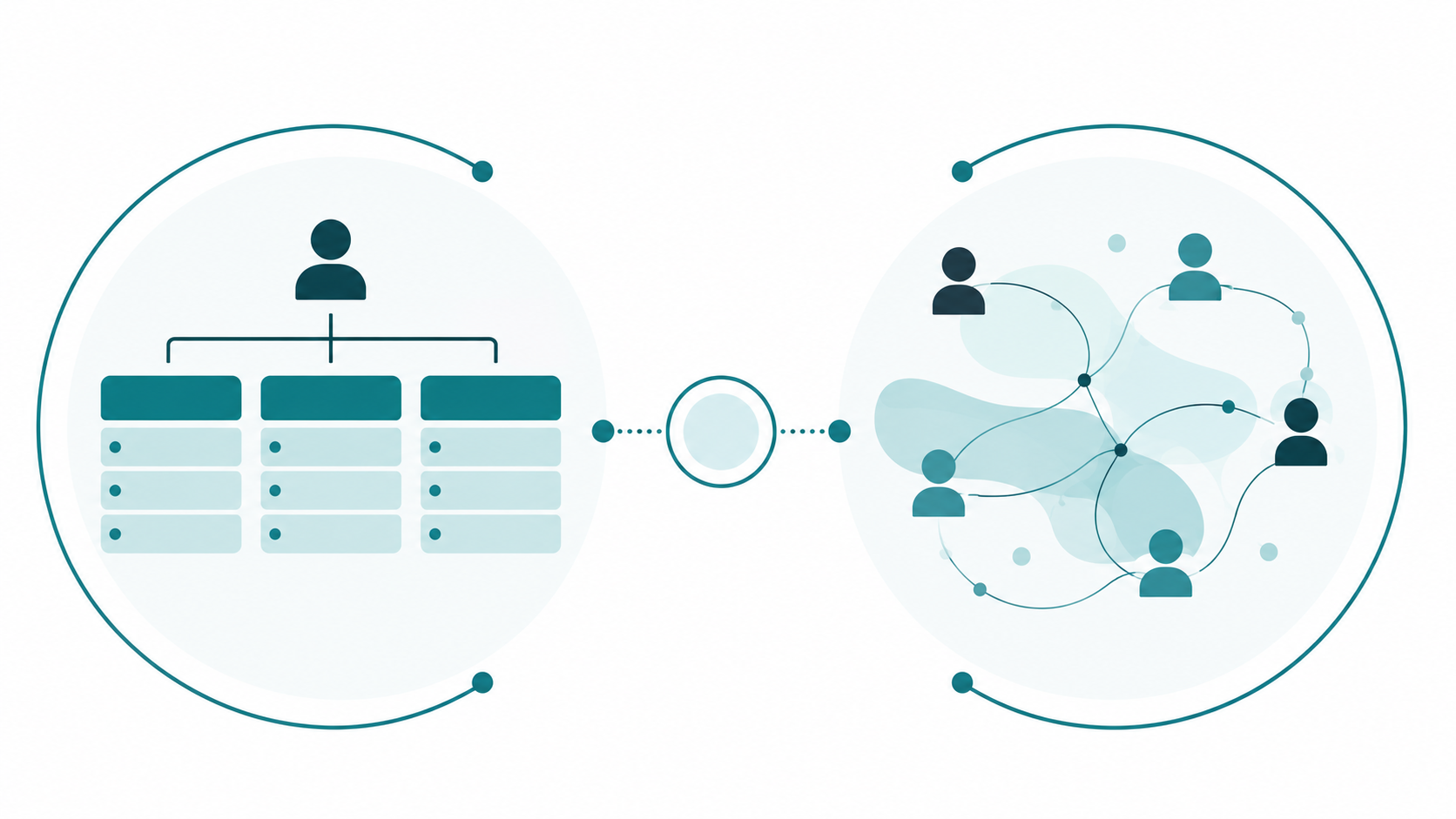
Competency mapping is the process of identifying the knowledge, skills, behaviors, and attitudes someone needs to perform their role effectively in an organization. The output is typically a competency profile per position that becomes the reference point for recruitment, performance evaluation, and employee development.
Behavioral mapping is the process of mapping someone’s actual behavioral patterns — how they tend to work, communicate, stay motivated, and respond to pressure — objectively and through data, independent of the role expectations attached to their position.
Both are useful, but they answer different questions:
Competency mapping answers: “What should someone have to succeed in this role?”
Behavioral mapping answers: “How does this person actually work — and does that match what’s needed?”
Competency mapping is typically built top-down — the organization defines ideal competencies, then evaluates how closely employees or candidates meet them. This is useful for designing development frameworks and career pathways.
Behavioral mapping works from the individual’s actual data — mapping patterns already present in a person, rather than rating how close they are to an ideal standard. This is useful for decisions that need deep individual insight quickly — hiring, promotion, or team restructuring.
The combination of both is the most powerful approach: competency mapping defines what the role needs, behavioral mapping reveals whether someone has the patterns most relevant to meeting that need.
Cavlent provides behavioral mapping that can be used alongside an organization’s existing competency framework — complementing competency data with deeper behavioral insight in under 20 minutes.
→ Learn about Cavlent’s behavioral mapping approach
→ What does an employee assessment actually measure?
→ When should a company do a team mapping?
→ Cavlent Exercise Card: a tool for discussing competencies and work patterns in a team
What is competency mapping?
Competency mapping is the process of identifying the knowledge, skills, behaviors, and attitudes someone needs to perform their role effectively. The output is a competency profile per position that serves as the reference for recruitment, performance evaluation, and employee development.
What’s the main difference between competency mapping and behavioral mapping?
Competency mapping defines the ideal competency standard for a role — built top-down by the organization. Behavioral mapping maps someone’s actual patterns — how they genuinely work and stay motivated, independent of expected standards. Both answer different questions and are most effective when used together.
When should you use competency mapping vs behavioral mapping?
Competency mapping is most relevant for designing development frameworks, career pathways, and long-term evaluation standards. Behavioral mapping is most relevant for decisions that need deep individual insight quickly — hiring, promotion, or building a new team.