
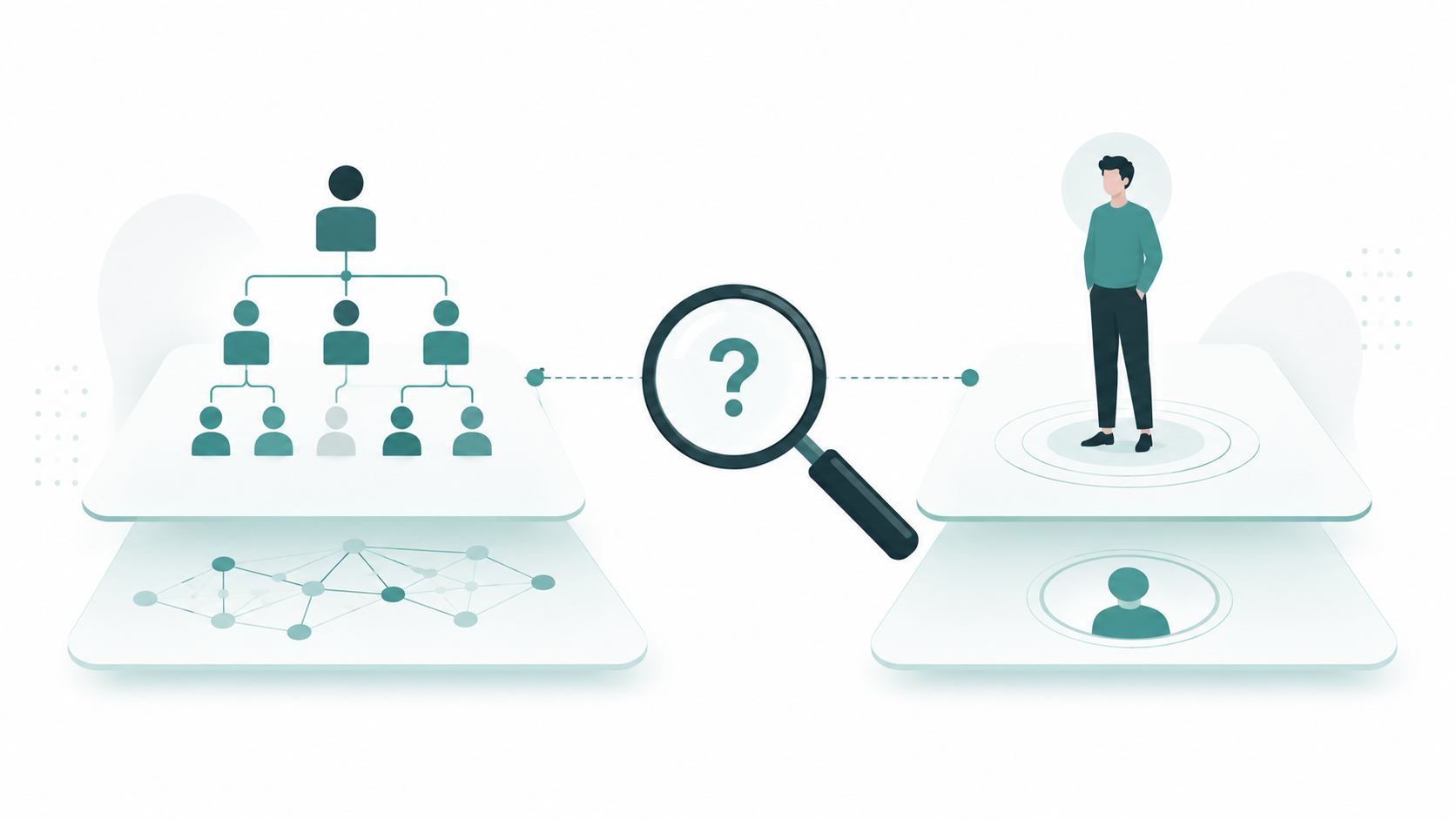
A system problem originates from an organization’s structure, processes, expectations, or culture — and will keep appearing even if the person is replaced. An individual problem originates from a specific person’s behavioral patterns, competence, or motivation — and can be addressed through coaching, training, or repositioning.
Misdiagnosing the two is one of the most expensive mistakes in management. Letting someone go because of a system problem won’t fix it — the next person to come in will face the same situation.
1. Does the same problem appear in different people in the same position?
If yes — this is most likely a system problem, not an individual one.
2. Does the problem only appear when interacting with specific people or contexts?
If yes — there may be a relational dynamic or context mismatch that needs closer examination.
3. Has the person with the problem performed well in a different context before?
If yes — this is a strong signal that the issue isn’t about individual capacity, but about fit with the current context.
4. Have interventions already been tried (coaching, training, feedback) with no change?
If yes — the root cause is likely not skill or motivation, but a more fundamental system issue or mismatch.
5. Have work expectations been communicated explicitly and consistently?
If not — resolve this first before concluding it’s an individual problem.
Cavlent’s Exercise Card can be a useful tool in this process — helping teams and leaders discuss role expectations more explicitly, making it easier to identify gaps between system and individual before decisions are made.
Cavlent also helps organizations map collective team behavioral patterns — providing data that helps more objectively distinguish what’s rooted in the system from what’s rooted in the individual.
→ Explore Cavlent’s solutions for organizational diagnostics
→ If every problem is always the team’s fault, maybe the problem isn’t the team
→ When the data is already there, but change still doesn’t happen
→ Cavlent Exercise Card: a discussion tool for clarifying role expectations in a team
What’s the difference between a system problem and an individual problem in an organization?
A system problem originates from an organization’s structure, processes, expectations, or culture — and will keep appearing even if the person is replaced. An individual problem originates from a specific person’s behavioral patterns, competence, or motivation — and can be addressed with the right intervention targeted at that individual.
Why is it important to distinguish system from individual problems before taking action?
Because a solution aimed at the wrong target not only fails to fix the problem, but can make the situation worse. Letting someone go because of a system problem creates the same cycle with the next person. Conversely, only fixing the system without addressing individual mismatches also isn’t enough.
What should you do if the same problem keeps appearing even after changing people?
This is a strong signal that the root cause is in the system — not the individual. The first step is checking whether expectations have been communicated explicitly, whether the work structure supports success in that role, and whether there are unrecognized cultural patterns consistently creating the same barrier.