

A standard 360 assessment compares two things: how someone sees themselves, and how the people around them see them. The results are useful, but there’s still one significant gap — there’s no objective reference point to determine which perception is closer to reality.
Cavlent Mapping360 was built to fill that gap.
What sets Cavlent Mapping360 apart from a standard 360 assessment is a third layer: behavioral mapping data grounded in Cavlent’s psychometric methodology — called the Scientific Baseline.
The Scientific Baseline isn’t opinion, isn’t interview-based, and isn’t a momentary impression. It’s data that reflects a person’s natural behavioral tendencies: how they make decisions, respond to pressure, manage a team, and navigate conflict.
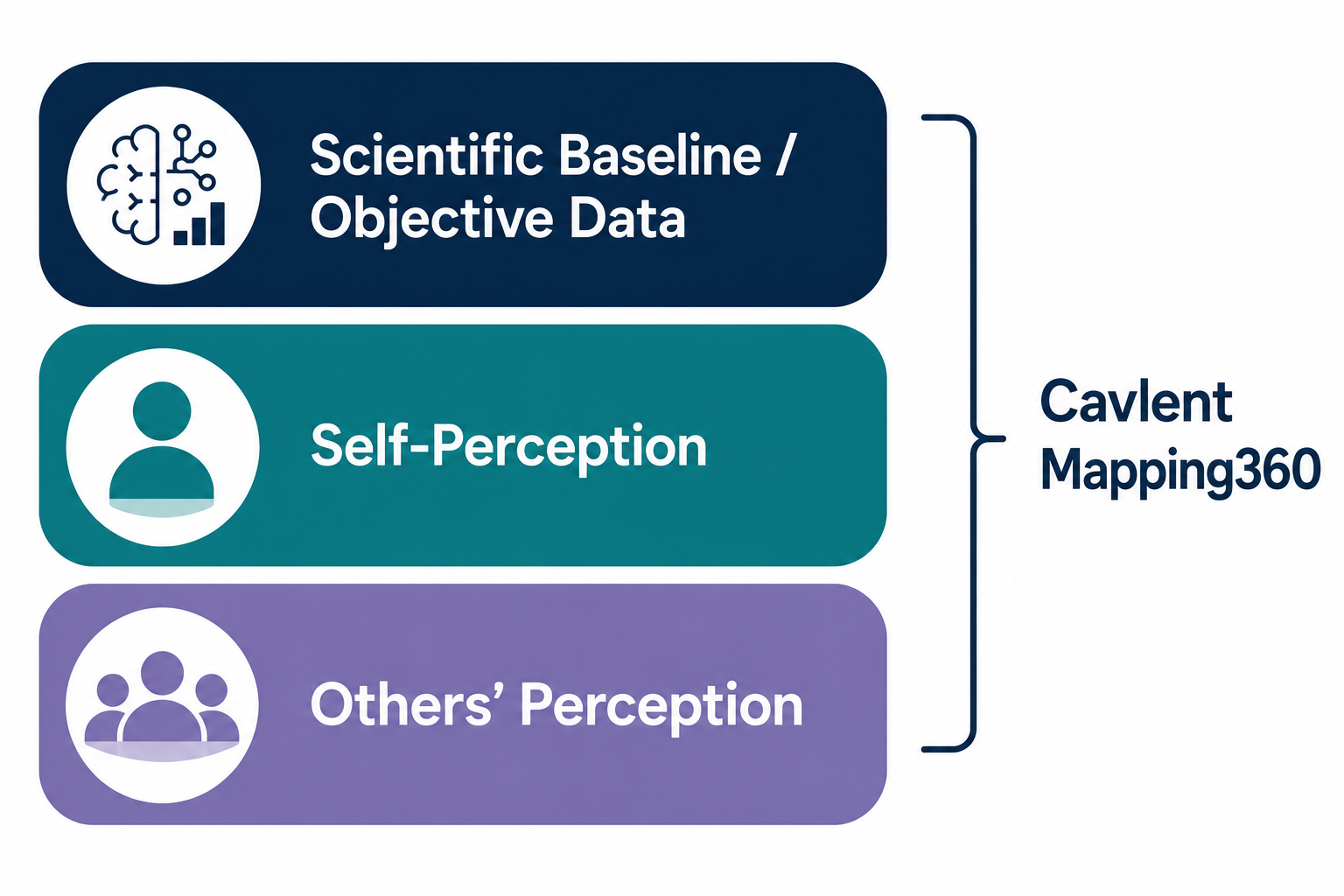
With these three layers — self-perception, others’ perception, and scientific baseline — Mapping360 can answer questions that no standard 360 assessment can:
When all three layers are compared, Cavlent Mapping360 can identify three distinct patterns:
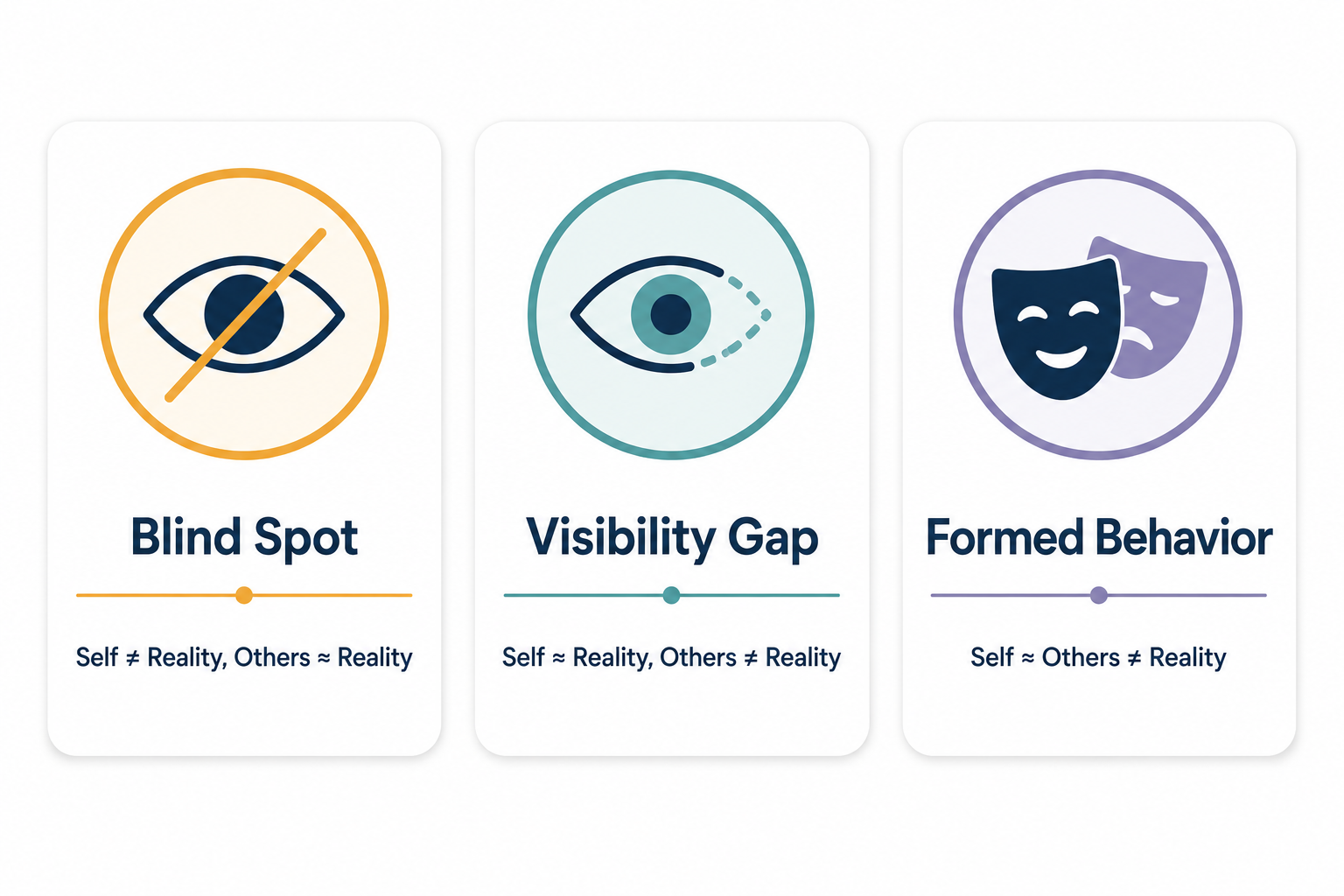
Blind Spot — When someone’s self-perception differs significantly from the data, while others see them more accurately. This is a condition where a person isn’t yet aware of how their behavior actually shows up — and precisely because it’s unrecognized, it’s difficult to address without targeted intervention.
Visibility Gap — When the scientific data and self-perception are aligned, but others perceive things differently. The relevant behavior or attitude is genuinely there, but it hasn’t yet registered or been felt by the people around them.
Formed Behavior — When self-perception and others’ perception appear aligned, but both differ from the scientific data. This indicates behavior that is being “shaped” — whether intentionally or not — to create a particular impression. It’s not stable, natural behavior.
Cavlent Mapping360 is designed specifically to support individual coaching — a context where the depth of personal reflection matters more than aggregate scores alone.
The data it generates helps coaches and leaders:
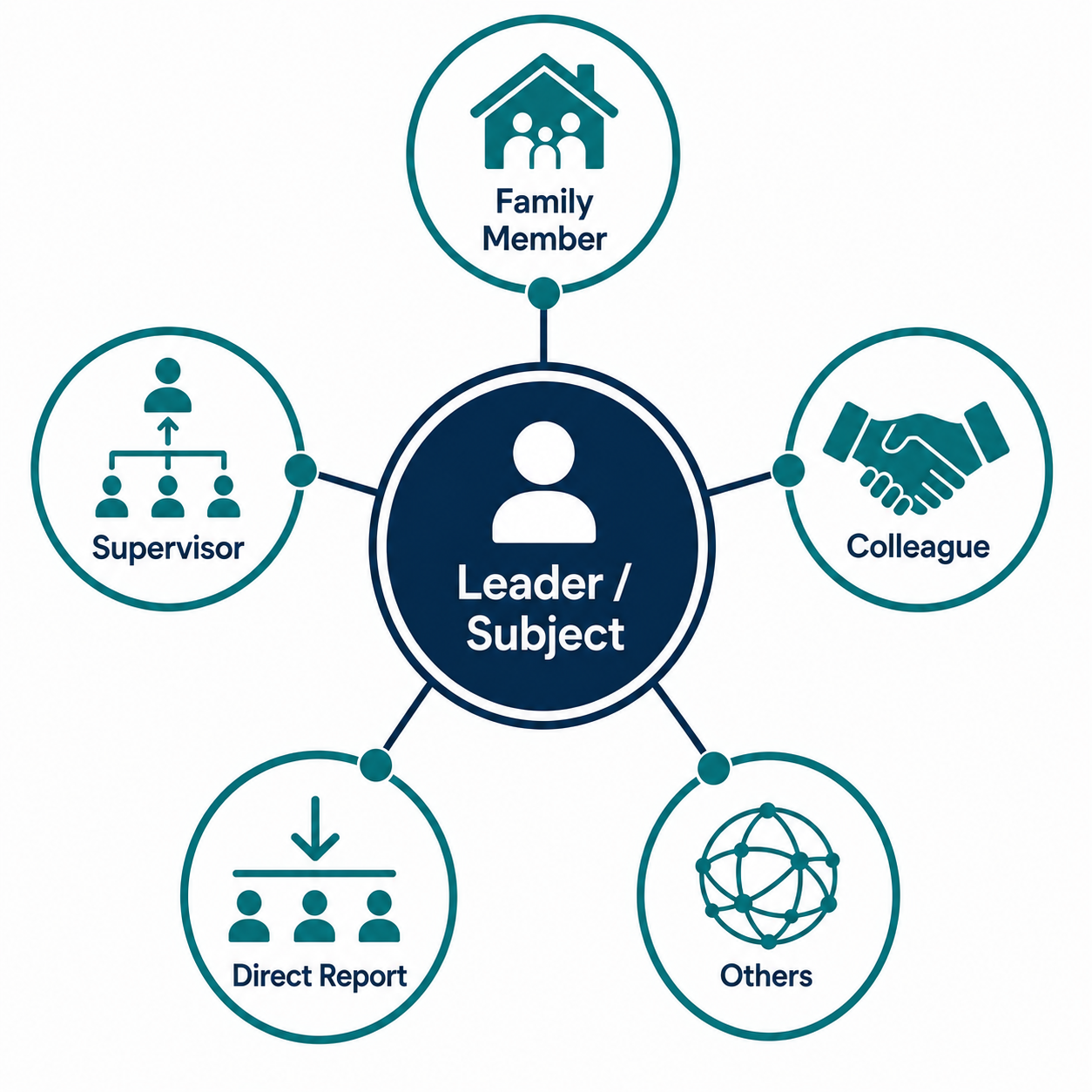
Assessment is gathered from five observer categories: family members, supervisors, colleagues, direct reports, and others. Each provides a different perspective, and the gaps between those perspectives are precisely what make the data most valuable in a coaching process.
To see how Cavlent Mapping360 works in a leadership development context, visit Cavlent Solutions.
→ How to Read a Behavioral Mapping Report for Candidate Screening
→ What Is Behavioral Team Mapping and Why Does Your Team Need It
→ Leadership Blind Spots: What They Are and How to Address Them
What makes Cavlent Mapping360 different from a standard 360 assessment?
A standard 360 assessment only compares self-perception with the accumulated perceptions of others. Cavlent Mapping360 adds a third layer: a Scientific Baseline from Cavlent’s psychometric methodology that represents objective natural behavior — not anyone’s perception. This enables the detection of gap types that conventional 360 assessments simply can’t surface, such as Blind Spots, Visibility Gaps, and Formed Behavior.
Who should use Mapping360?
Mapping360 is designed to support individual coaching processes — well-suited for leaders or individuals who want a deeper understanding of the gap between who they think they are, who others think they are, and who they actually are behaviorally.
Who can be an observer in Mapping360?
There are five observer categories: family members, supervisors, colleagues, direct reports, and others. Each category offers a different perspective, because the same person can behave differently across different contexts.
Does a detected gap always mean something is wrong?
No. A gap is an important signal for reflection — not a verdict. Some degree of difference between perceptions is natural and expected. What warrants closer attention is when gaps are at the “Very Divergent” or “Extremely Divergent” level — especially when there are significant indications of Formed Behavior or a Blind Spot.
How long does it take to complete Mapping360?
The subject’s portion can be completed in under 20 minutes. The report is available on the same day once all observers have completed their assessments.