

Assessment follow-through is the process of turning collected data into actionable understanding — and ultimately into real decisions and genuine change within an organization.
This is the stage most often skipped.
Many organizations conduct an assessment, receive a comprehensive report — and then the report gets filed away, read once, and never used optimally. Not because the data isn’t useful, but because no process exists to turn that data into a concrete direction.
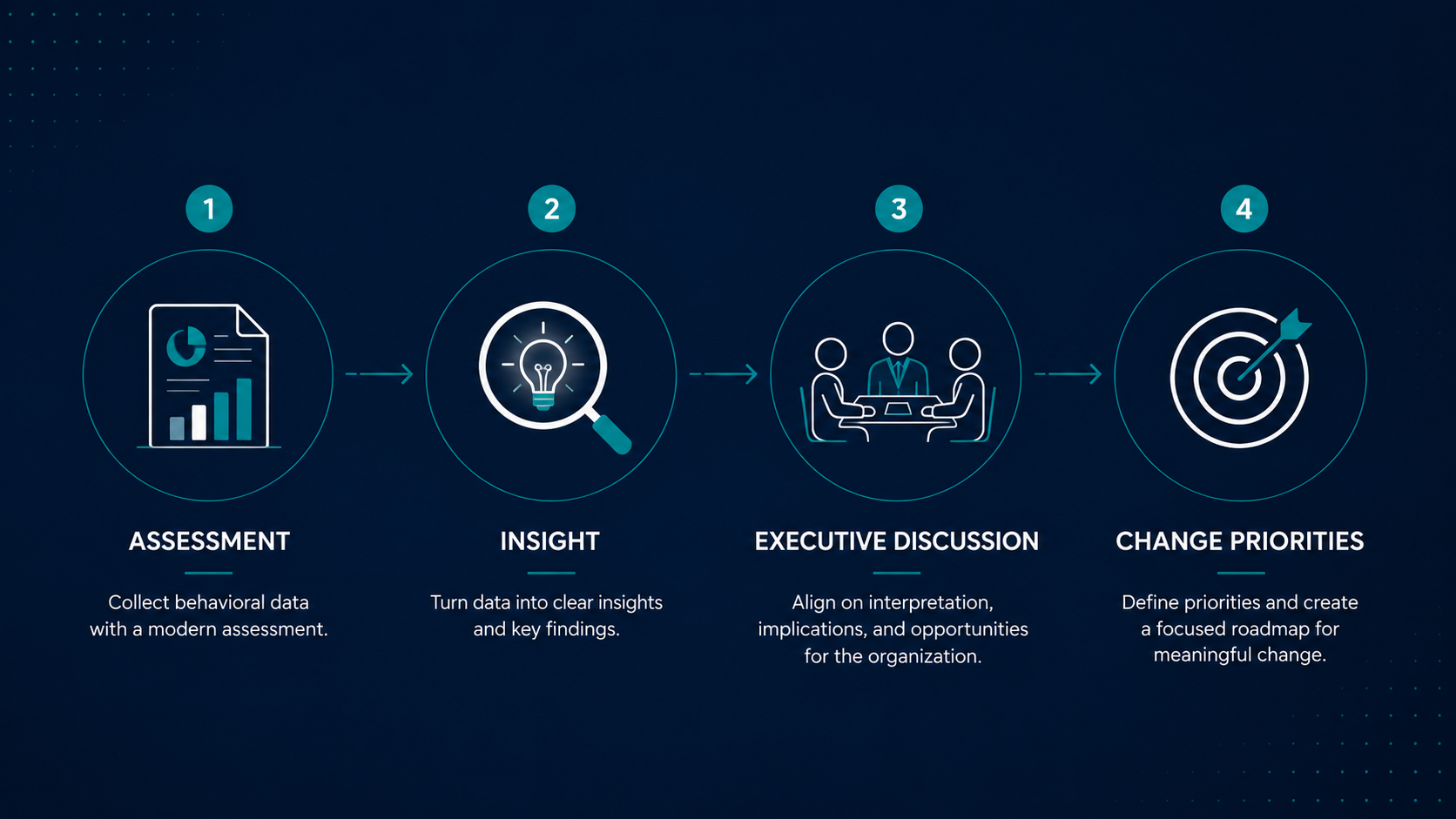
1. Assessment — collecting the right data
The starting point that determines the quality of the entire process. Behavioral data must be objective, impossible to manipulate, and reflect actual conditions — not the conditions participants want to present.
2. Insight — reading data in organizational context
Raw data needs to be read while considering the business context, team structure, and strategic goals being pursued. Numbers or profiles visible in a report only become meaningful when connected to the day-to-day reality the organization faces.
3. Executive Discussion — aligning on findings and implications
This stage is often overlooked — yet it’s the one that most determines whether data will actually be used. Leaders and decision-makers need to come together to understand findings, discuss their implications, and agree on which areas are most critical to address.
4. Change Priorities — determining concrete next steps
From that discussion, the organization can determine the most impactful change focus: whether that’s restructuring roles, developing specific capabilities, improving recruitment processes, or cultural intervention. Most importantly, these priorities are data-based — not assumptions or personal preferences of decision-makers.
What often happens without this process: organizations know there’s a problem, conduct an assessment, get data — but because no one facilitates structured interpretation and discussion, that data never becomes real action.
Cavlent is designed to accompany this entire process — from assessment through to change priorities — so the data generated genuinely impacts organizational decisions and direction, rather than becoming a report that sits in a folder.
→ Learn more about Cavlent’s solutions
→ When the data is already there, but change still doesn’t happen
→ When should a company do a team mapping?
→ Signs your organization is ready to scale — and signs it isn’t
Why don’t most assessment results get followed through effectively?
Because there’s no structured process to turn data into shared understanding and action priorities. Assessment produces data — but data needs to be interpreted in specific organizational context, discussed with decision-makers, and translated into concrete steps before it can have real impact.
What is an “executive discussion” after an assessment?
An executive discussion is a session where leaders and decision-makers come together to understand assessment findings, discuss their implications for strategy and operations, and agree on which areas are most priority to address. It’s the bridge between data and action.
How do you determine the right change priorities from assessment results?
The right change priorities emerge from the intersection of two things: how significant the potential impact of a change is on business goals, and how urgently the current condition requires intervention. Assessment provides the data to answer both questions more objectively.